The short answer
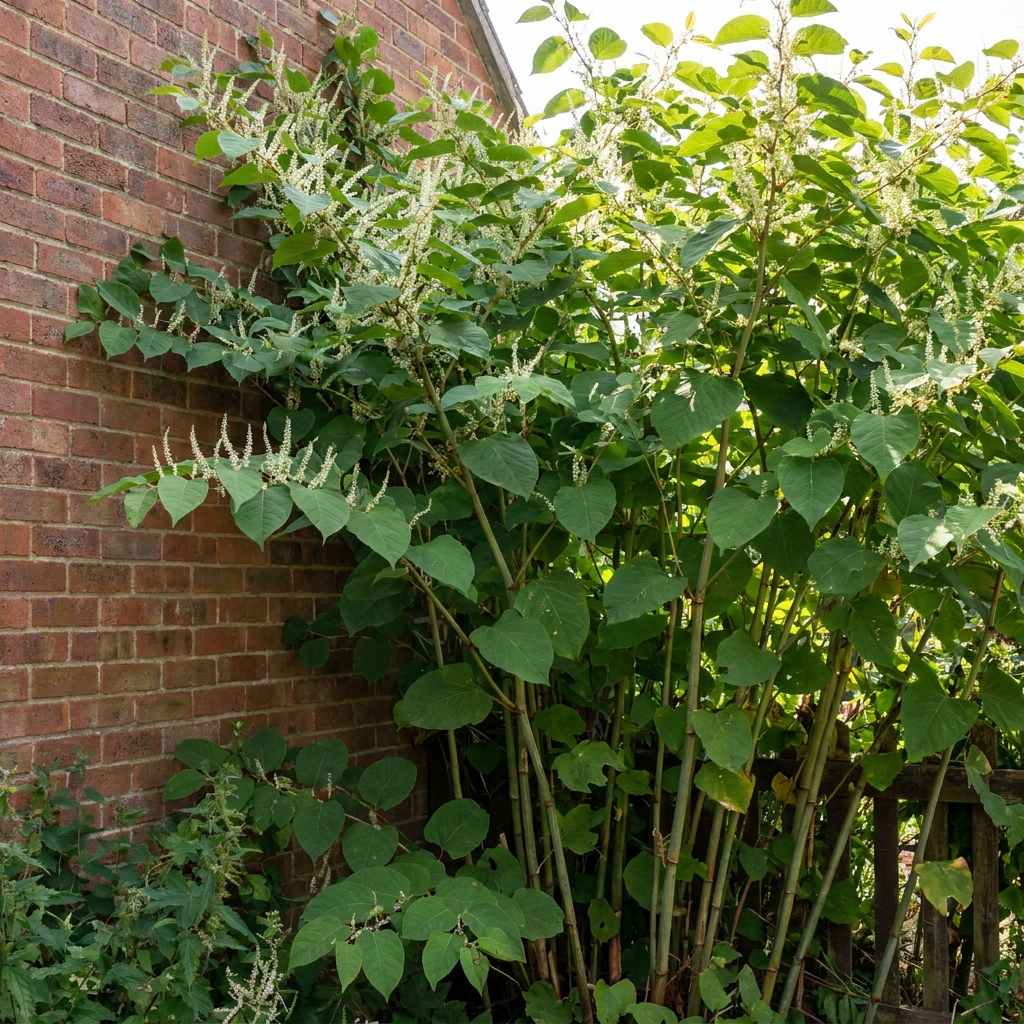
Japanese knotweed is identified by three things together: hollow, bamboo-like stems flecked with red or purple; broad, shovel- or heart-shaped leaves arranged in an alternating zig-zag along the stem; and sprays of creamy-white flowers in late summer. The shoots emerge red in spring, the canes reach 2–3 metres by summer, and the foliage forms a dense leafy screen. No single feature is conclusive on its own, so look for the combination — or commission a professional survey.
Correctly identifying Japanese knotweed matters, because several harmless plants resemble it and a wrong call can cause needless alarm or a missed problem. The plant changes dramatically through the year, so the clues you look for in March are different from those in August. This guide walks through the key features and how they appear season by season.
Identification at a glance
- Stems Hollow, bamboo-like, green with red/purple speckles
- Leaves Shovel/heart-shaped, up to ~14cm, flat base, pointed tip
- Leaf pattern Alternating zig-zag along the stem
- Flowers Creamy-white sprays, late summer (Aug–Oct)
- Spring shoots Red/purple, asparagus-like, fast-growing
- Mature height 2–3 metres in one season
The stems
The canes are the most reliable feature. They are hollow (snap one and it is empty, like bamboo), grow in a zig-zag from node to node, and are pale green flecked with red or purple speckles. Mature canes are 2–3 metres tall and have a distinct ring at each node where leaves emerge. In winter the same canes turn orange-brown, become brittle and may remain standing — covered in our guide to Japanese knotweed in winter.
The leaves
The leaves are large, up to around 14cm long, and shield- or heart-shaped: a broad, flat base tapering to a point. They are bright green and arranged alternately, so that as the stem zig-zags the leaves come off in a regular staggered pattern. This zig-zag arrangement is one of the clearest distinguishing marks and helps separate knotweed from look-alikes such as bindweed, bamboo and young lilac.
The flowers
From late summer the plant produces clusters of tiny creamy-white flowers held in loose sprays among the upper leaves. They are an easy confirmation late in the year — covered in detail in our page on Japanese knotweed flowers.
Season by season
| Season | What you see |
|---|---|
| Early spring | Red/purple asparagus-like shoots pushing through soil, often from old crowns |
| Late spring | Rapid growth; rolled-up red-veined young leaves unfurling on green speckled canes |
| Summer | Full height 2–3m; dense green heart-shaped foliage; classic zig-zag stems |
| Late summer/autumn | Creamy-white flower sprays, then leaves yellow and canes start to die back |
| Winter | Brown, hollow, brittle dead canes standing or collapsed; no leaves |
Telling it apart from look-alikes
Many calls turn out to be harmless plants. The most common confusions are with bindweed, ornamental bamboo and young lilac or dogwood. We cover each in detail:
- Japanese knotweed vs bindweed — bindweed twines and climbs; knotweed stands as a self-supporting cane.
- Japanese knotweed vs bamboo — both are hollow and cane-like, but bamboo leaves are long and narrow.
- Japanese knotweed vs lilac — young lilac shoots are the most frequent false alarm in spring.
Frequently asked questions
What is the easiest way to identify Japanese knotweed?
Look for the combination of hollow bamboo-like stems with red/purple speckles, large heart-shaped leaves in an alternating zig-zag pattern, and creamy-white flower sprays in late summer. No single feature is conclusive, so check several together.
What does Japanese knotweed look like in early spring?
Red or purple asparagus-like shoots emerge from the ground, often in a cluster from an old crown, and grow very quickly. Young leaves are rolled up and reddish before turning green.
How tall does Japanese knotweed get?
It typically reaches 2–3 metres in a single growing season, forming dense stands of cane-like stems.
Can I identify Japanese knotweed in winter?
It is harder. In winter you see only the dead brown hollow canes, which can persist through the season. The rhizome stays alive underground, so absence of leaves does not mean the plant is dead.
Sources & further reading
- Environment Agency — Identify and control invasive non-native plants
- gov.uk — How to stop Japanese knotweed from spreading
- RICS — Japanese knotweed and residential property guidance note (2022)
- Property Care Association (PCA) — Identification of Japanese knotweed
This guide is general information, not a site-specific survey or legal advice. Japanese knotweed treatment and removal should be assessed by a PCA-accredited specialist before you act.