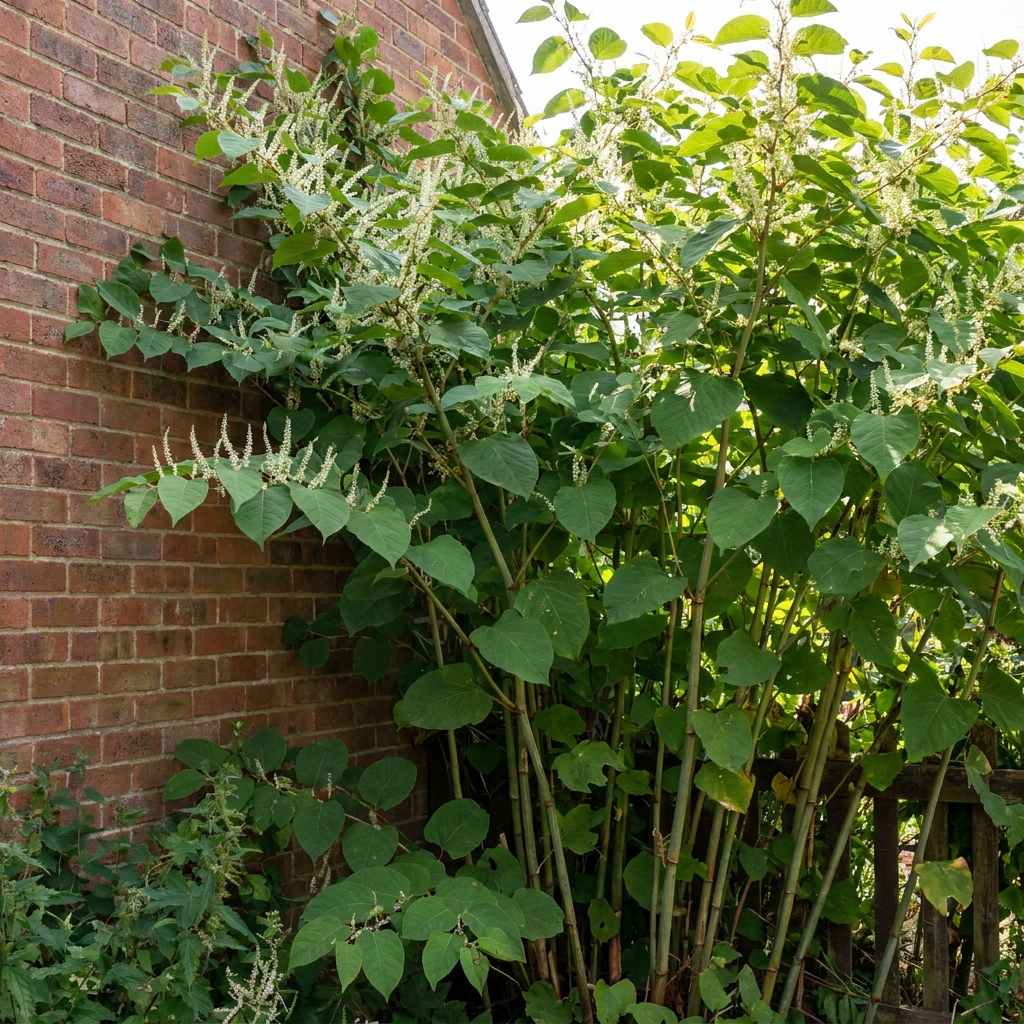
The short answer
Yes – you can usually get a mortgage on a house affected by Japanese knotweed, provided there is a treatment plan from a PCA-accredited specialist backed by an insurance-backed guarantee (IBG). Since the 2022 RICS guidance, lenders assess each case on risk (RICS management categories A–D) rather than refusing automatically. Decisions vary by lender: some lend freely with a plan in place, a minority decline category-A cases, and a few may require a retention until treatment begins.
A property valuer who records Japanese knotweed does not automatically make a home unmortgageable. The position changed materially with the 2022 RICS guidance note, which replaced the old rigid ‘7-metre rule’ with a risk-based assessment. What lenders look for today is evidence that the infestation is being managed properly. This guide explains how the mortgage process treats knotweed, what documents unlock lending, and where lenders still differ.
Mortgages and knotweed at a glance
- Mortgageable? Usually, with a plan & IBG
- Key document PCA-accredited treatment plan
- Lender safeguard Insurance-backed guarantee (IBG)
- Assessment basis RICS categories A–D (2022)
- Typical IBG term 5–10 years
- Who decides Valuer + lender criteria
What the lender actually assesses
When a RICS valuer inspects a property for mortgage purposes and notes Japanese knotweed, they assign a management category under the 2022 RICS guidance note. The category – not a fixed distance – drives the lending decision. A property with a documented, ongoing treatment programme presents a manageable risk; one with untreated, vigorous growth close to the dwelling presents a higher one. The valuer reports the category and any recommended action to the lender, who then applies its own criteria.
| RICS category | Typical scenario | Usual mortgage outcome |
|---|---|---|
| A | Knotweed within 7m and affecting the dwelling/outbuildings | Plan + IBG usually required; some lenders cautious |
| B | Within 7m but not affecting the main building | Generally lendable with a treatment plan |
| C | Present but more than 7m away | Usually lendable; plan recommended |
| D | Dead/treated growth, no current viable rhizome | Normally no barrier |
The documents that unlock lending
Two pieces of evidence reassure almost every lender:
- A treatment or management plan from a PCA-accredited specialist, setting out the method (herbicide programme or excavation) and timescale.
- An insurance-backed guarantee (IBG) – typically 5 to 10 years – that funds re-treatment if the knotweed returns and the contractor has ceased trading.
The IBG matters because it protects the lender’s security for the life of the mortgage, not just the treatment period. See our guide to the insurance-backed guarantee and what a management plan for a mortgage must contain.
Where lenders still differ
There is no single industry rule. Lenders set their own appetite within the UK Finance Mortgage Lenders’ Handbook framework. Most high-street lenders will proceed with a plan and IBG; a minority are more conservative on category-A cases or may apply a retention – holding back part of the advance until treatment commences. Specialist or adverse-credit lenders are sometimes more flexible. Because criteria change, a mortgage broker who knows current lender positions is the most reliable route – see how lenders differ on knotweed.
What to do if knotweed is found
Commission a survey from a PCA-accredited firm, obtain a written management plan and a quote, and confirm an IBG is available. Share these with your broker or lender early. If you are the buyer, you can ask the seller to fund treatment or reduce the price; if the seller, having a plan ready before marketing keeps the chain moving.
This is general information, not site-specific or legal advice. Any infestation should be assessed by a PCA-accredited specialist before you rely on a particular mortgage outcome.
Frequently asked questions
Will any lender refuse a mortgage because of Japanese knotweed?
A minority of lenders are cautious on RICS category-A cases, and a few may decline or apply a retention. However, most mainstream lenders will lend where there is a PCA-accredited treatment plan and an insurance-backed guarantee, so refusal is far from automatic.
Do I need to treat the knotweed before completion?
Not always. Many lenders accept a documented plan and IBG with treatment scheduled to begin after completion. Some apply a retention until works start. Your valuer and lender will confirm the requirement case by case.
Does the knotweed have to be on my land to affect my mortgage?
No. Knotweed on a neighbouring property within range of the dwelling can still be recorded by the valuer and affect the assessment, because rhizome can encroach. The category reflects proximity and impact, not just ownership.
Is an insurance-backed guarantee essential?
For most lenders, yes. The IBG protects the lender’s security for the mortgage term by funding re-treatment if the original contractor is no longer trading. It is one of the two documents – alongside the plan – that typically unlocks lending.
Sources & further reading
- RICS — Japanese knotweed and residential property, guidance note (2022)
- UK Finance — Mortgage Lenders’ Handbook (lender instructions to conveyancers)
- Property Care Association (PCA) — Invasive Weed Control Group, treatment plans & insurance-backed guarantees
- gov.uk — Prevent Japanese knotweed from spreading
This guide is general information, not a site-specific survey or legal advice. Japanese knotweed treatment and removal should be assessed by a PCA-accredited specialist before you act.