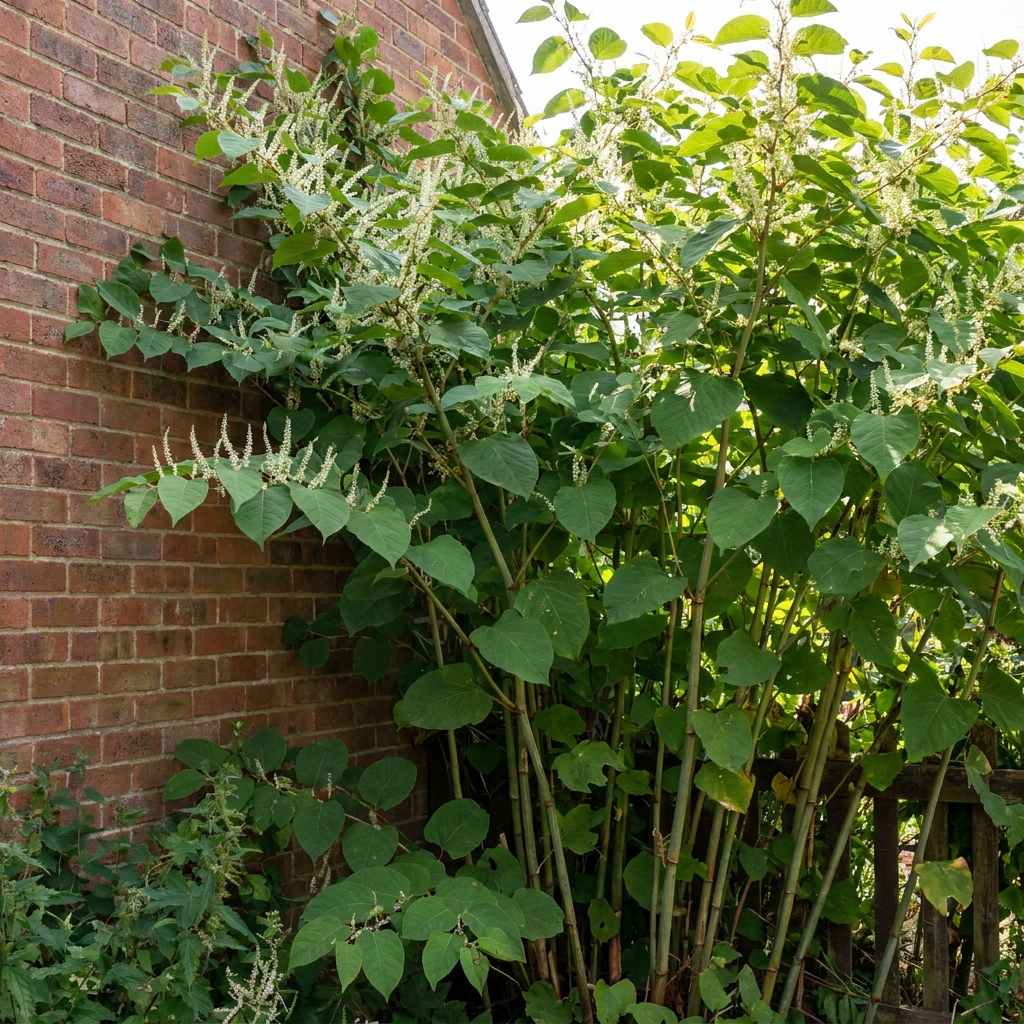
The short answer
Start with evidence and a polite request, then escalate. The ladder is: (1) get a professional survey to confirm and map the encroachment; (2) write to the neighbour asking them to treat it; (3) if they refuse, ask the council to consider a Community Protection Notice under the Anti-social Behaviour, Crime and Policing Act 2014; and (4) as a last resort, bring a private-nuisance claim under Williams v Network Rail (2018). Each rung is cheaper and quicker than the next.
When knotweed pushes under or through a boundary, the instinct is to panic or to confront. Neither helps. UK law gives you a graduated set of remedies that work best in order – evidence first, conversation second, the council third, the court last. Working the ladder calmly protects your position, keeps costs down, and usually resolves the problem long before a judge is involved.
The escalation ladder
- Rung 1 Professional survey & photographs
- Rung 2 Polite letter requesting treatment
- Rung 3 Ask council about a CPN (2014 Act)
- Rung 4 Private-nuisance claim (Williams, 2018)
- Time limit Generally 6 years for the civil claim
- First, always Confirm it is knotweed via a specialist
Rung 1 – get evidence before you act
Do not rely on a guess. Commission a survey from a PCA-accredited firm to confirm the plant, map where the rhizome is encroaching and date the photographs. A typical survey and report costs roughly £150–£350. This evidence underpins every later step and is essential if you ever need to prove encroachment in court. If you are unsure it is knotweed at all, start with the identification guide.
Rung 2 – write to your neighbour
Most neighbours do not know they have a problem or that they may be liable. A calm, factual letter – enclosing the survey and asking them to arrange treatment – resolves a large share of cases. Keep it courteous and keep a copy; it later shows the court you acted reasonably and gave them a chance to put things right.
Rung 3 – the Community Protection Notice
If the neighbour ignores you, the Anti-social Behaviour, Crime and Policing Act 2014 allows a council or the police to issue a Community Protection Notice (CPN) where the knotweed is having a detrimental effect on your quality of life. A CPN can require the neighbour to control the plant; breach can lead to a fixed penalty or prosecution. You cannot issue a CPN yourself – you ask the local authority to consider one, supplying your evidence.
Rung 4 – a private-nuisance claim
As a last resort you can sue in private nuisance. Williams v Network Rail confirms that rhizome encroaching onto your land is actionable because it interferes with your use and enjoyment, even without structural damage. A claim can seek the cost of treatment, the cost of your survey and damages for loss of amenity. The detail of what you can recover is set out in the encroachment claim guide, and the time limit and solicitor question in the when to instruct a solicitor guide.
Keep your own side under control
- Treat any knotweed on your land promptly – see how to kill knotweed.
- Never cut, strim or move it, which can spread the rhizome and may be an offence.
- Document everything with dated photographs.
Frequently asked questions
Can I make my neighbour remove their knotweed?
Not directly, but you have remedies. You can ask the council to consider a Community Protection Notice under the 2014 Act, and as a last resort bring a private-nuisance claim under Williams v Network Rail, which can require them to fund treatment and pay damages.
Can I treat my neighbour’s knotweed myself?
No. Entering or treating their land without permission can create liability and, done badly, can spread the rhizome. Treat only your own side and pursue the legal remedies for theirs.
Who pays for the treatment in a dispute?
If a claim succeeds, the neighbour responsible for the encroaching knotweed can be ordered to fund a treatment programme, reimburse your survey and pay general damages for loss of amenity, as in Williams v Network Rail.
How long do I have to bring a claim?
A private-nuisance claim is generally subject to a six-year limitation period, but timing in continuing-nuisance cases can be complex – take specialist legal advice promptly.
Sources & further reading
- Anti-social Behaviour, Crime and Policing Act 2014 (Community Protection Notices)
- Williams v Network Rail Infrastructure Ltd [2018] EWCA Civ 1514
- gov.uk — Prevent Japanese knotweed from spreading
- RICS — Japanese knotweed and residential property guidance note (2022)
This guide is general information, not a site-specific survey or legal advice. Japanese knotweed treatment and removal should be assessed by a PCA-accredited specialist before you act.