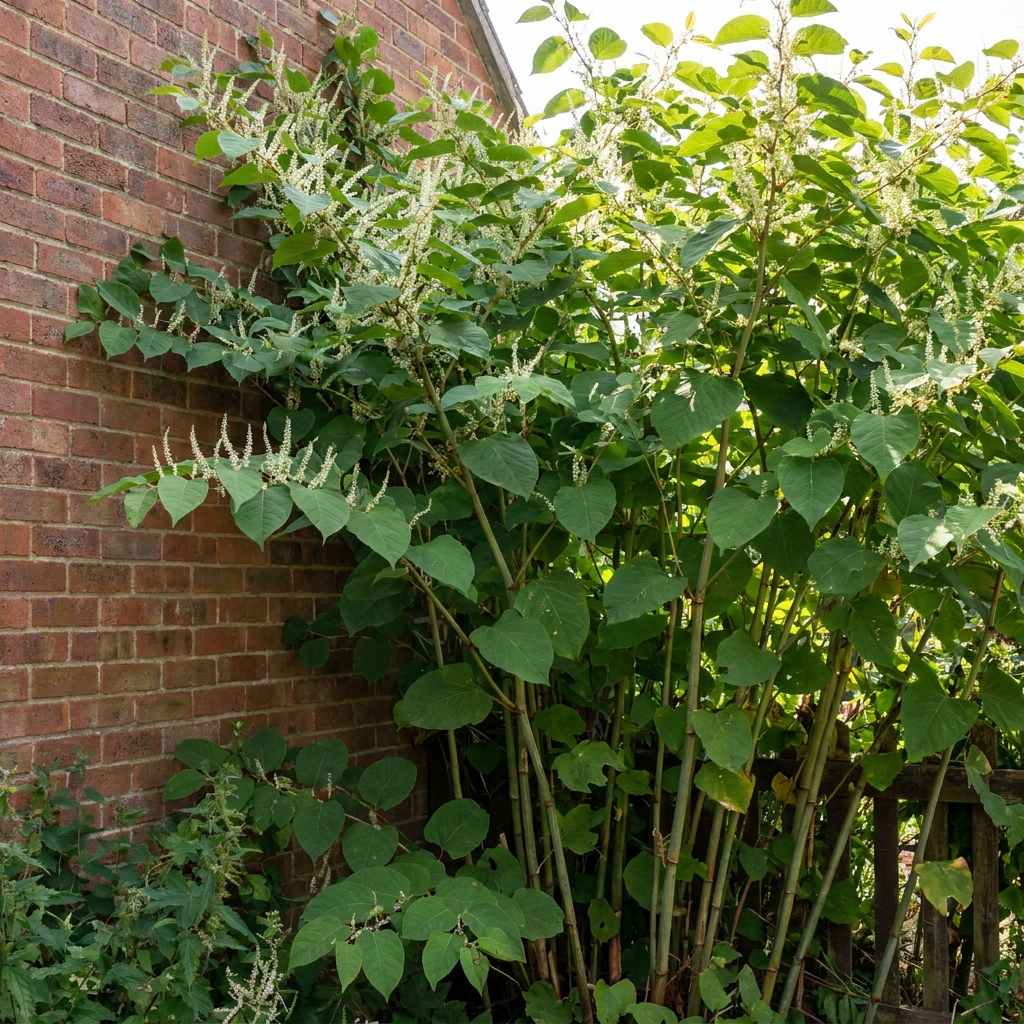
The short answer
It is not illegal to have Japanese knotweed growing on your own land, but you must not allow it to spread. Four instruments govern it: the Wildlife & Countryside Act 1981 (an offence to plant or cause it to grow in the wild), the Anti-social Behaviour, Crime and Policing Act 2014 (Community Protection Notices for nuisance to neighbours), the Environmental Protection Act 1990 (knotweed is controlled waste), and the leading case Williams v Network Rail (2018), which makes encroachment onto a neighbour an actionable private nuisance.
Japanese knotweed sits at the intersection of property law, environmental regulation and the law of nuisance. There is no single “Knotweed Act”; instead a handful of statutes and one landmark Court of Appeal decision combine to define your duties. The headline most people get wrong is simple – having knotweed is lawful; letting it spread is where liability begins. This page maps the whole framework and links to the detailed guides on each strand.
The framework at a glance
- Having it on your land Not illegal
- Letting it spread to the wild Offence – W&C Act 1981, s.14
- Affecting neighbours Community Protection Notice – ASBCPA 2014
- Knotweed waste Controlled waste – EPA 1990
- Encroaching on a neighbour Actionable nuisance – Williams (2018)
- This page General information, not legal advice
There is no single knotweed law
UK knotweed liability is assembled from four sources. None of them makes it unlawful simply to have the plant on your property, which is the most common misunderstanding. What the law targets is the spread of the plant and its effect on other people’s land and the wider environment.
| Instrument | What it does |
|---|---|
| Wildlife & Countryside Act 1981, s.14 / Sch.9 | Makes it an offence to plant or otherwise cause knotweed to grow in the wild. |
| Anti-social Behaviour, Crime and Policing Act 2014 | Lets councils and police issue a Community Protection Notice where knotweed harms a neighbour’s quality of life. |
| Environmental Protection Act 1990 | Classes knotweed material and contaminated soil as controlled waste, with a duty of care on disposal. |
| Williams v Network Rail [2018] EWCA Civ 1514 | Confirms that rhizome encroachment onto neighbouring land is an actionable private nuisance. |
The civil side: nuisance and encroachment
The criminal offences above are rarely prosecuted against ordinary homeowners. In practice, most knotweed disputes are civil. The leading authority is Williams v Network Rail, in which the Court of Appeal held that knotweed rhizome encroaching onto a neighbour’s land is an actionable private nuisance because it interferes with the owner’s use and enjoyment of the land – even before any structural damage occurs. This is the foundation of an encroachment claim and of disputes between adjoining owners.
The environmental side: spread and waste
Two further duties bite. Under the 1981 Act it is an offence to cause knotweed to grow in the wild, which is why activities such as strimming, flailing or fly-tipping contaminated soil can break the law. Under the 1990 Act, any knotweed material removed from a site is controlled waste that must travel under a waste transfer note to a licensed facility. Both are explained in the spread and fly-tipping guide.
Where to go next
- Neighbour’s knotweed reaching you – see the neighbour dispute guide.
- Whether it is illegal at all – see is it illegal to have knotweed.
- Buying or selling – the framework also shapes the TA6 disclosure duty.
Every strand assumes the same first step: get a professional identification and, if confirmed, a treatment or management plan from an accredited firm before any legal action is contemplated.
Frequently asked questions
Is it illegal to have Japanese knotweed in the UK?
No. It is not illegal to have Japanese knotweed growing on your own land. It becomes a legal problem if you allow it to spread – into the wild (an offence under the Wildlife & Countryside Act 1981) or onto a neighbour’s land (an actionable private nuisance).
Which law makes spreading knotweed an offence?
Section 14 of the Wildlife & Countryside Act 1981, read with Schedule 9, makes it an offence to plant or otherwise cause knotweed to grow in the wild.
Can a council force me to remove knotweed?
A council cannot generally compel removal, but under the Anti-social Behaviour, Crime and Policing Act 2014 it can issue a Community Protection Notice requiring you to control knotweed that is affecting a neighbour’s quality of life.
What is the leading knotweed court case?
Williams v Network Rail Infrastructure Ltd [2018] EWCA Civ 1514, in which the Court of Appeal confirmed that rhizome encroachment onto neighbouring land is an actionable nuisance affecting the use and enjoyment of land.
Sources & further reading
- gov.uk — Prevent Japanese knotweed from spreading
- Wildlife & Countryside Act 1981, s.14 and Schedule 9
- Anti-social Behaviour, Crime and Policing Act 2014 (Community Protection Notices)
- Environmental Protection Act 1990 (controlled waste, duty of care)
- Williams v Network Rail Infrastructure Ltd [2018] EWCA Civ 1514 (Court of Appeal)
This guide is general information, not a site-specific survey or legal advice. Japanese knotweed treatment and removal should be assessed by a PCA-accredited specialist before you act.