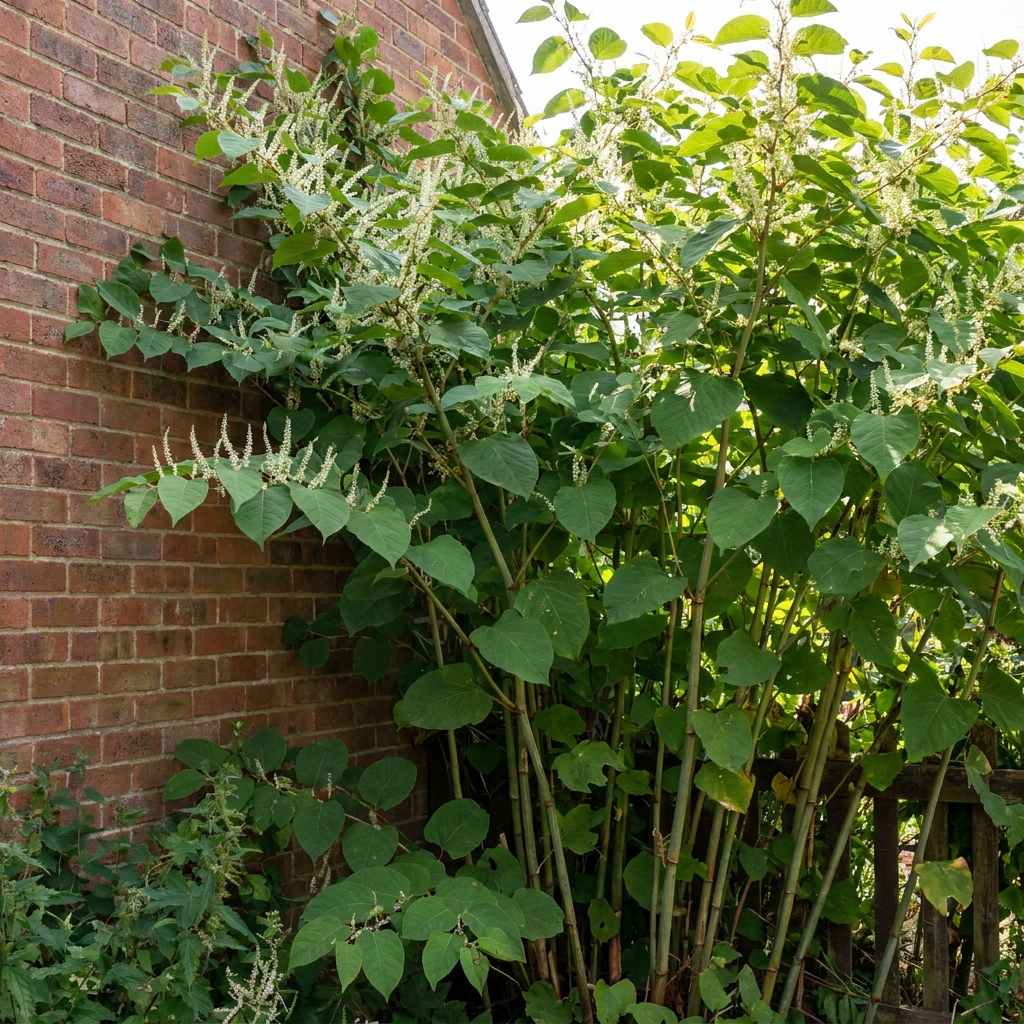
The short answer
Dumping knotweed-contaminated soil or cuttings is unlawful on two fronts. Under the Wildlife & Countryside Act 1981 it is an offence to cause knotweed to grow in the wild – which fly-tipping does. Under the Environmental Protection Act 1990 knotweed material and any soil containing its rhizome are controlled waste, so moving it off site triggers a duty of care: it must travel under a waste transfer note to a licensed facility. Doing otherwise risks prosecution and significant fines.
Knotweed spreads from tiny fragments of rhizome, so soil and cuttings are not ordinary garden waste – they are how the plant colonises new ground. The law treats moving and dumping that material seriously, because a single tipped load can start a new infestation. This guide explains the two offences, the waste duty of care, and how to dispose of knotweed properly.
Knotweed waste at a glance
- Knotweed material Controlled waste – EPA 1990
- Contaminated soil Also controlled waste
- Dumping in the wild Offence – W&C Act 1981, s.14
- Moving it off site Needs a waste transfer note
- Carrier Must be a registered waste carrier
- Destination Licensed / authorised facility
Two offences in one act of dumping
Fly-tipping knotweed can break two laws simultaneously. First, under section 14 of the Wildlife & Countryside Act 1981 it is an offence to plant or otherwise cause knotweed to grow in the wild – and tipping rhizome-laden soil onto a verge or scrubland does exactly that. Second, under the Environmental Protection Act 1990 the material is controlled waste, and dumping it breaches the waste rules. The same careless act therefore exposes you to two separate sets of penalties.
Why knotweed is controlled waste
Japanese knotweed material – and crucially any soil containing its rhizome – is classed as controlled waste under the Environmental Protection Act 1990. That is because even a small fragment of rhizome can regenerate. You cannot put it in your household or garden bin, and you cannot tip it. When it is removed from a site it must be handled under the duty of care in the legislation.
| Requirement | What it means |
|---|---|
| Classification | Knotweed and contaminated soil are controlled waste. |
| Duty of care | Whoever produces or moves it must ensure proper handling. |
| Waste transfer note | Off-site movement must be documented and described. |
| Registered carrier | It must be moved by a registered waste carrier. |
| Authorised site | It must go to a licensed landfill or authorised facility. |
How to dispose of knotweed properly
- Do not strim, flail or chip it – that fragments the rhizome and aids spread, and dumping the result can be an offence.
- Where treatment rather than removal is chosen, an accredited herbicide programme avoids creating waste at all – see how to kill knotweed.
- Where excavation is necessary, use a PCA-accredited contractor who will move the waste under a transfer note to a licensed site.
- If you spot fly-tipped knotweed, report it to the council as a controlled-waste / fly-tipping offence.
Where this fits in the wider law
These waste and spread offences are the environmental strand of the broader UK knotweed legal framework. They sit alongside the civil law of nuisance: if your dumped or spread knotweed reaches a neighbour, you can also face a private-nuisance claim on top of any prosecution.
Frequently asked questions
Is it illegal to dump Japanese knotweed?
Yes. Dumping knotweed-contaminated soil or cuttings can be an offence under the Wildlife & Countryside Act 1981 (causing it to grow in the wild) and breaches controlled-waste duties under the Environmental Protection Act 1990.
Can I put knotweed in my garden waste bin?
No. Knotweed material and any soil containing its rhizome are controlled waste. They cannot go in household or garden bins and must be disposed of at a licensed facility via a registered waste carrier.
How should knotweed waste be disposed of?
Off-site movement must be by a registered waste carrier, under a waste transfer note describing the waste, to a licensed landfill or authorised site. A PCA-accredited contractor handles this as part of excavation.
What if I accidentally spread knotweed by moving soil?
Spreading rhizome-bearing soil – even on your own land – can seed new growth and may engage the offences. Treat all such soil as hazardous and have it handled by an accredited specialist.
Sources & further reading
- Wildlife & Countryside Act 1981, s.14 and Schedule 9
- Environmental Protection Act 1990 (controlled waste, duty of care, s.34)
- gov.uk — Prevent Japanese knotweed from spreading
- Environment Agency — treatment and disposal of Japanese knotweed
This guide is general information, not a site-specific survey or legal advice. Japanese knotweed treatment and removal should be assessed by a PCA-accredited specialist before you act.