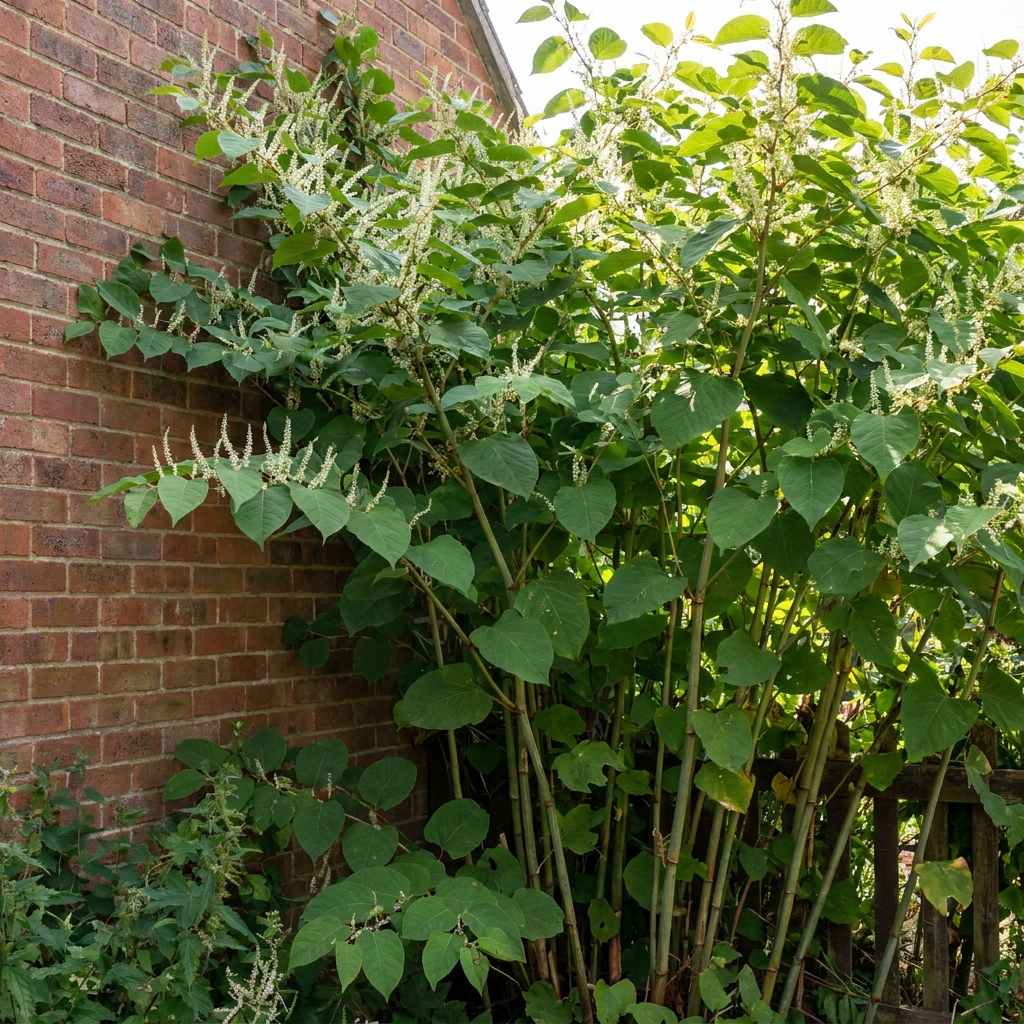
The short answer
No – it is not illegal to have Japanese knotweed growing on your own land. There is no duty to remove it and no offence in simply having it. What the law prohibits is allowing it to spread. Under the Wildlife & Countryside Act 1981 (s.14, Schedule 9) it is an offence to plant or cause knotweed to grow in the wild, and under the 2014 Act a council can act if it harms a neighbour. So the legal risk lies in spread and waste, not in mere presence.
This is the single most misunderstood point about knotweed. Headlines about “illegal” plants and £5,000 fines lead many homeowners to think they are breaking the law simply by having it. They are not. Understanding precisely where the line falls – between lawful possession and unlawful spread – tells you what you actually have to do and what the real risks are.
The precise position
- Having it on your land Lawful – no offence, no duty to remove
- Causing it to grow in the wild Offence – W&C Act 1981, s.14
- Letting it harm a neighbour CPN possible – ASBCPA 2014
- Disposing of it as garden waste Unlawful – it is controlled waste
- Selling without disclosing Misrepresentation risk – TA6 7.8
- Practical duty Don’t spread it; manage it responsibly
What is lawful: having it
There is no law in England, Scotland or Wales that makes it an offence to have Japanese knotweed growing on your own property, and no legal obligation to treat or remove it. Allowing it to grow on your land, by itself, breaks no rule. This is why a survey may report knotweed without any suggestion that the owner has done anything illegal.
What is unlawful: spreading it
The legal duties begin the moment the plant leaves your control. Under section 14 of the Wildlife & Countryside Act 1981, read with Schedule 9, it is an offence to plant or otherwise cause knotweed to grow in the wild. In practice that captures actions which spread it – cutting, strimming, flailing or dumping contaminated soil and cuttings. The maximum penalties are significant, reflecting Parliament’s concern about the plant escaping into the countryside.
| Conduct | Lawful? |
|---|---|
| Knotweed simply growing in your garden | Yes |
| Leaving it untreated on your land | Yes (but see neighbour duties) |
| Cutting and dumping it in the wild or on a verge | No – offence under the 1981 Act |
| Letting it spread to a neighbour’s land | Risk of CPN and a nuisance claim |
| Binning knotweed with general garden waste | No – it is controlled waste |
The neighbour and waste dimensions
Two further duties soften the “it’s lawful to have it” rule in practice. If your knotweed affects a neighbour’s quality of life, a council can issue a Community Protection Notice under the Anti-social Behaviour, Crime and Policing Act 2014, and the neighbour may have a civil claim under private nuisance. And once any knotweed material is dug up, the Environmental Protection Act 1990 treats it as controlled waste that must be disposed of properly – see the spread and waste guide.
So what should you actually do?
- You are not obliged to remove it, but managing it protects your property value and your neighbours – see how to kill knotweed.
- Never cut or move it carelessly; that is where the offence lies.
- If you are selling, you must answer the TA6 form honestly – see selling with knotweed.
Frequently asked questions
Is it against the law to have Japanese knotweed in my garden?
No. It is not illegal to have Japanese knotweed growing on your own land, and there is no legal obligation to remove it. The offence is allowing it to spread.
Can I be fined just for having knotweed?
Not for simply having it. Fines arise if you cause it to grow in the wild (Wildlife & Countryside Act 1981), breach a Community Protection Notice (2014 Act) or dispose of it unlawfully as controlled waste (Environmental Protection Act 1990).
Do I have to remove knotweed if I find it?
No law compels removal. However, managing or treating it is sensible to protect your property value and to avoid liability to neighbours if it spreads.
Is cutting my own knotweed illegal?
Cutting it on your own land is not itself an offence, but spreading it – for example by dumping the cuttings in the wild – is. Cuttings and contaminated soil are controlled waste and must be disposed of properly.
Sources & further reading
- Wildlife & Countryside Act 1981, s.14 and Schedule 9
- gov.uk — Prevent Japanese knotweed from spreading
- Anti-social Behaviour, Crime and Policing Act 2014
- Environmental Protection Act 1990 (controlled waste)
This guide is general information, not a site-specific survey or legal advice. Japanese knotweed treatment and removal should be assessed by a PCA-accredited specialist before you act.