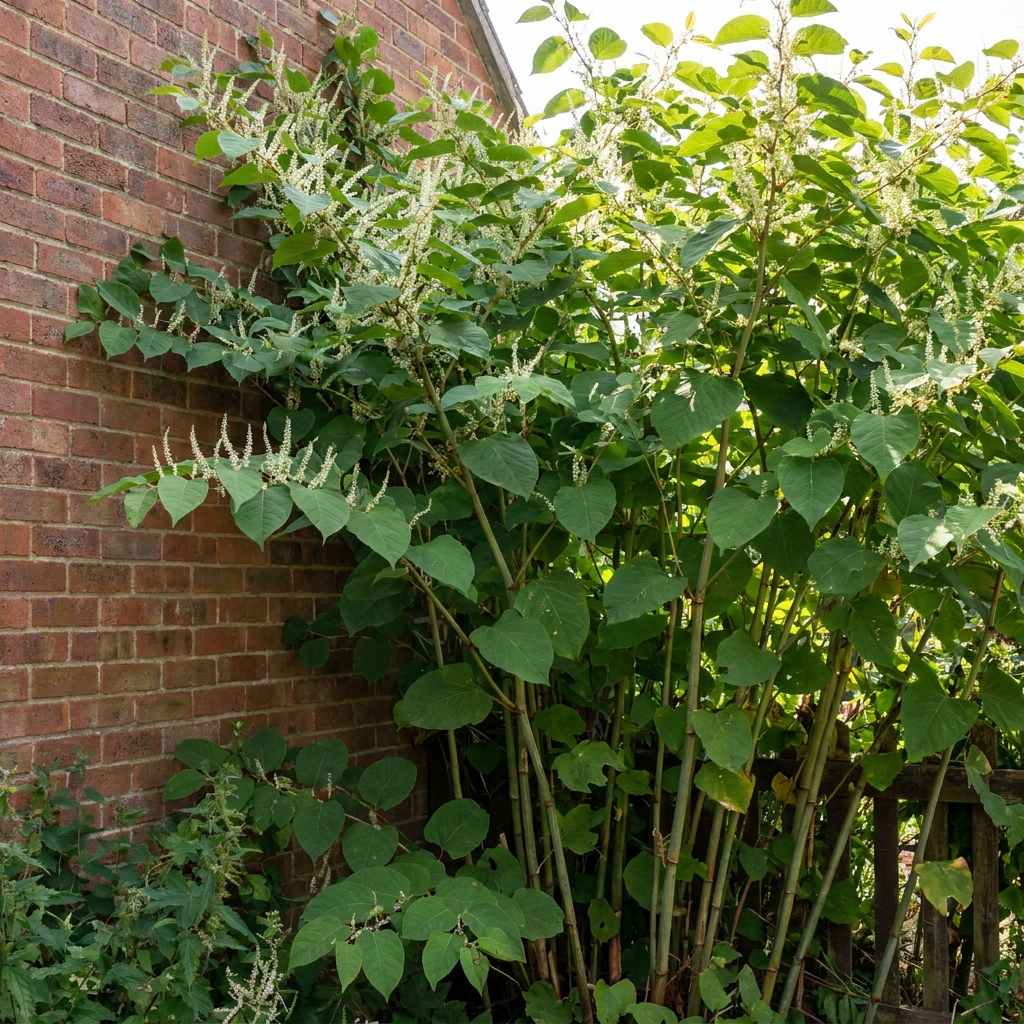
The short answer
To lend on a knotweed-affected property, most lenders require a management plan from a PCA-accredited specialist, backed by an insurance-backed guarantee (IBG). The plan sets out the survey findings, RICS category, treatment method and timescale; the IBG protects the lender if the contractor later fails. Together they convert an open-ended risk into a defined, funded, guaranteed process – which is what unlocks lending.
When a valuer flags knotweed, the lender is not asking “is there knotweed?” so much as “is it being dealt with properly?”. A professional management plan answers that question. It is the single most important document in getting a mortgage on an affected home. This guide explains exactly what a lender-grade plan contains, why the insurance-backed guarantee must sit alongside it, and how the two unlock lending.
Management plans at a glance
- Who writes it PCA-accredited specialist
- What it sets out Survey, category, method, timescale
- Must include Insurance-backed guarantee
- Treatment options Herbicide programme or excavation
- Typical herbicide cost £1,500–£3,000 over 3 seasons
- Purpose Unlock lending; protect security
What a lender-grade management plan contains
A management plan acceptable to lenders is produced by a PCA-accredited specialist and typically sets out:
- The survey findings – extent of the stand, likely rhizome spread, proximity to the building.
- The RICS management category (A–D) under the 2022 guidance.
- The treatment method – a herbicide programme or excavation/removal – and why it is appropriate.
- The timescale – herbicide programmes typically run over about three growing seasons, with monitoring.
- The cost and the insurance-backed guarantee arrangements.
It is, in effect, a documented commitment that the problem will be resolved by professionals and underwritten if anything goes wrong.
| Plan element | Why the lender wants it |
|---|---|
| PCA-accredited author | Confidence the work meets industry standards |
| RICS category | Quantifies the risk being managed |
| Defined method & timescale | Shows a real, bounded process |
| Insurance-backed guarantee | Protects the security for the loan term |
Why the IBG must come with it
A plan on its own commits the contractor; it does not protect the lender if that contractor goes out of business. That is why the plan must be paired with an insurance-backed guarantee, typically running 5–10 years and transferable to future owners. The plan describes the cure; the IBG insures it. Most lenders, working within the UK Finance Mortgage Lenders’ Handbook framework, want both.
How the plan unlocks the mortgage
With the plan and IBG in hand, the valuer and lender can see a defined, funded, guaranteed route to resolution. The lender may then proceed – sometimes with a retention until treatment begins. This is what moves a flagged valuation to an approved mortgage; see mortgages and knotweed and how lenders differ.
Getting one in place
Commission a survey and plan from a PCA-accredited contractor that offers IBGs, and share the documents with your broker or lender early. If you are selling, having the plan ready before marketing keeps buyers’ lenders on side. This is general information, not financial or legal advice – use a PCA-accredited specialist and confirm requirements with your lender.
Frequently asked questions
What is a knotweed management plan?
It is a document from a PCA-accredited specialist setting out the survey findings, RICS category, treatment method, timescale, cost and insurance-backed guarantee. It demonstrates to a lender that the infestation is being resolved professionally and is underwritten.
Why does the lender need a management plan and not just treatment?
The plan, with its insurance-backed guarantee, gives the lender a defined, funded and guaranteed route to resolution that protects their security for the loan term. Treatment alone, especially DIY, cannot give the lender that assurance.
Can I write the management plan myself to save money?
No. Lenders require a plan from a PCA-accredited specialist with an insurance-backed guarantee. Self-treatment generally cannot be insured or relied upon, so it will not satisfy a lender even if carried out carefully.
Does a management plan guarantee my mortgage is approved?
It greatly improves your chances, but the lender still applies its own criteria and the RICS category. Some lenders may add a retention until works begin. A whole-of-market broker can match your plan to a suitable lender.
Sources & further reading
- Property Care Association (PCA) — Invasive Weed Control Group, management plans
- UK Finance — Mortgage Lenders’ Handbook
- RICS — Japanese knotweed and residential property, guidance note (2022)
- gov.uk — Prevent Japanese knotweed from spreading
This guide is general information, not a site-specific survey or legal advice. Japanese knotweed treatment and removal should be assessed by a PCA-accredited specialist before you act.