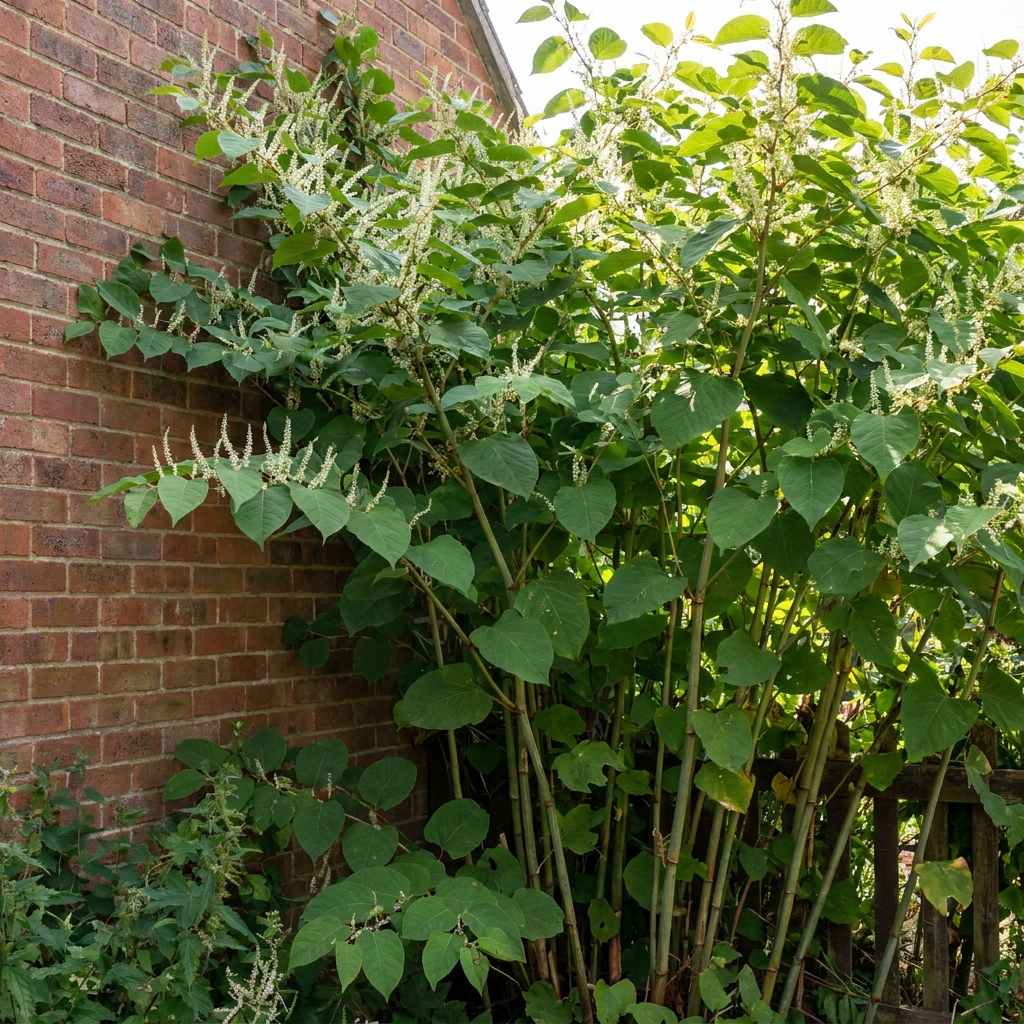
The short answer
Young lilac is the most common Japanese knotweed false alarm: both can have reddish young shoots and broadly heart-shaped leaves in spring. The key differences are that lilac is a woody shrub with paired (opposite) leaves and solid woody stems, whereas knotweed has hollow speckled canes and alternating zig-zag leaves. Dogwood, houttuynia, bistort and ornamental shrubs are also frequently mistaken for it. The hollow cane and zig-zag leaf pattern are the deciding tests.
Most reported knotweed sightings in spring turn out to be harmless plants, and lilac tops the list. Early in the year, before the classic features have fully developed, several plants can superficially resemble emerging knotweed. This page covers the usual suspects and the simple checks that separate them, so you can avoid both false alarms and missed problems.
Spring look-alikes at a glance
- Most common false alarm Young lilac
- Knotweed stems Hollow, speckled, herbaceous canes
- Lilac stems Solid, woody — lilac is a shrub
- Knotweed leaves Alternating zig-zag along the stem
- Lilac leaves Paired (opposite) on the stem
- Other look-alikes Dogwood, houttuynia, bistort, ornamental shrubs
Why lilac fools people
In spring, young lilac (Syringa) puts out reddish shoots and broadly heart-shaped leaves that, at a glance, echo emerging Japanese knotweed. The resemblance fades as both plants develop, but early in the year it is the single most common cause of a knotweed false alarm. Two checks settle it quickly:
- Stem type: lilac is a woody shrub with solid woody stems; knotweed has hollow, herbaceous canes that snap to reveal an empty centre.
- Leaf arrangement: lilac leaves are arranged in opposite pairs, whereas knotweed leaves alternate in a zig-zag along the stem.
Other plants mistaken for knotweed
Lilac is not the only culprit. The following are regularly reported as suspected knotweed:
| Plant | Why it’s confused | How to tell it apart |
|---|---|---|
| Lilac (young) | Reddish shoots, heart-shaped leaves | Woody stems; opposite paired leaves |
| Dogwood | Reddish stems in some varieties | Woody shrub; opposite leaves; no hollow cane |
| Houttuynia | Heart-shaped leaves, spreading habit | Low ground-cover; aromatic; much smaller |
| Bistort/Persicaria | Related family, similar flower spikes | Smaller, no bamboo-like cane |
| Russian vine | Related climber, similar flowers | Twining climber, not a self-supporting cane |
The deciding tests
Whatever the look-alike, the same two features reliably point to knotweed: the hollow, red- or purple-speckled cane and the alternating zig-zag leaf arrangement. Add the late-summer creamy-white flower sprays and the spring red asparagus-like shoots, and the picture is complete. Our full identification guide walks through these in order.
When a false alarm still matters
Even a harmless look-alike can cause problems if it is recorded incorrectly on a property transaction. The TA6 property information form asks sellers about knotweed, and a wrong answer either way can have consequences. If in doubt, get it confirmed before completing any paperwork — see what Japanese knotweed is.
Frequently asked questions
Is lilac often mistaken for Japanese knotweed?
Yes — young lilac is the most common false alarm in spring, because both can have reddish shoots and broadly heart-shaped leaves. Lilac is a woody shrub with opposite paired leaves, while knotweed has hollow canes and alternating zig-zag leaves.
What other plants look like Japanese knotweed?
Dogwood, houttuynia, bistort and other Persicaria relatives, Russian vine and several ornamental shrubs are all regularly mistaken for it, especially early in the season before the plant matures.
What is the quickest way to rule out knotweed?
Check for a hollow, red- or purple-speckled cane and leaves that alternate in a zig-zag. Woody stems, paired opposite leaves, or a twining climbing habit all indicate it is not knotweed.
Should I declare a look-alike on a property form?
Only declare confirmed Japanese knotweed. If you are unsure, get a professional identification before completing the TA6 form, as an inaccurate answer either way can have consequences.
Sources & further reading
- Property Care Association (PCA) — Identification of Japanese knotweed
- Environment Agency — Identify and control invasive non-native plants
- RICS — Japanese knotweed and residential property guidance note (2022)
This guide is general information, not a site-specific survey or legal advice. Japanese knotweed treatment and removal should be assessed by a PCA-accredited specialist before you act.