The short answer
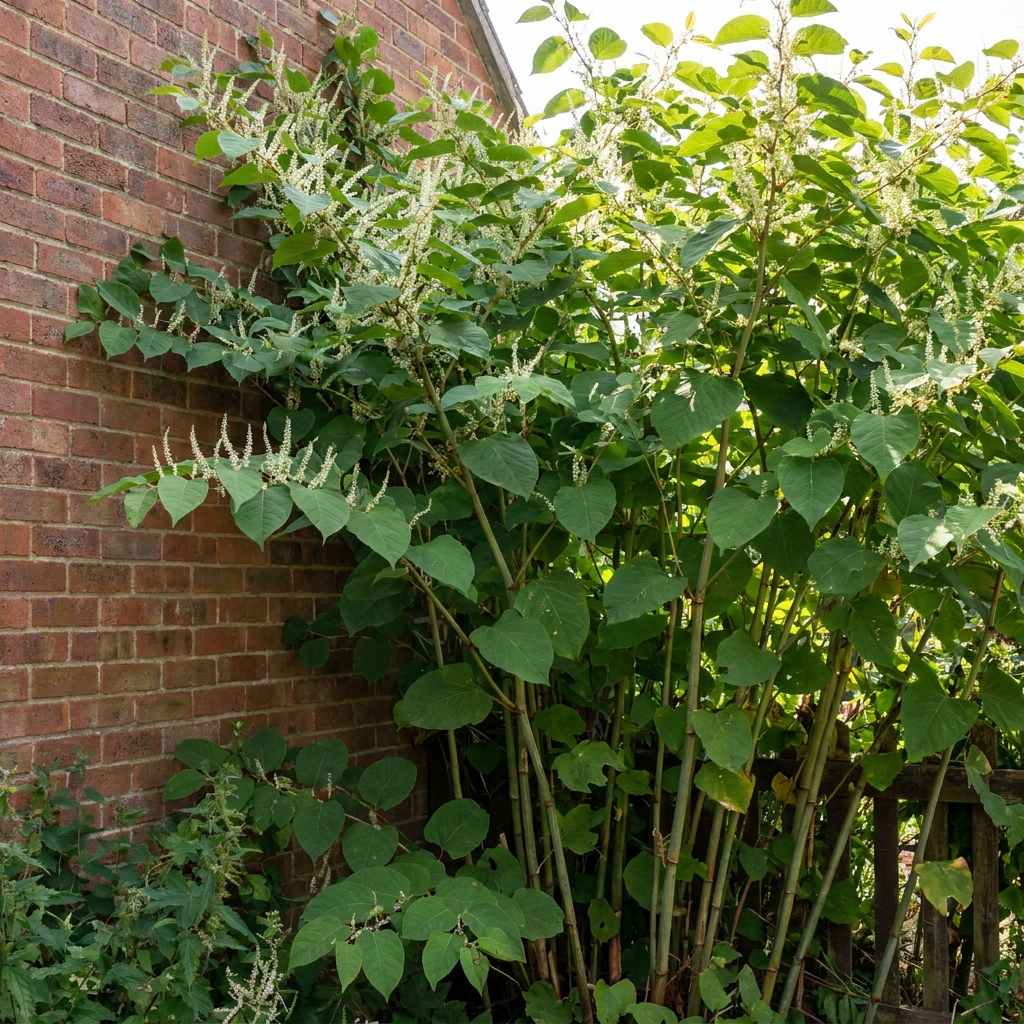
Japanese knotweed flowers are small, creamy-white blooms held in loose, branching sprays that appear from late summer, roughly August to October. They cluster among the upper leaves and are one of the easiest ways to confirm the plant late in the year. The flowers are attractive to bees, but because UK knotweed is a single female clone they produce no viable seed — so the flowers are an identification aid, not a means of spread.
By late summer the green stands of Japanese knotweed throw out sprays of tiny pale flowers, and for a few weeks identification becomes much easier. This page explains exactly when the flowers appear, what they look like, why they matter for identification, and why — unlike most flowering plants — they do not lead to the plant spreading by seed in Britain.
Knotweed flowers at a glance
- Colour Creamy-white
- Form Small flowers in loose, branching sprays
- When Late summer to autumn, roughly Aug–Oct
- Position Among the upper leaves and stem tips
- Seed in UK None viable — plants are a single female clone
- Pollinators Attractive to bees and other insects
What the flowers look like
The flowers are individually tiny — only a few millimetres — but they are produced in large numbers on slender, branching sprays (botanically, panicles) that emerge from where the leaves meet the stem. From a short distance a flowering stand looks frothy and creamy-white. The display is brief but distinctive, and it stands out against the dense green heart-shaped foliage.
When they appear
Flowering is a late-season event. In most of the UK the sprays open from August and continue into October, depending on the season and location. This timing is useful: it falls at the end of the growing year, just before the canes begin to die back and the plant enters winter dormancy. If you are trying to confirm a suspected stand, late summer is the most forgiving time to do it.
| Period | Flower stage |
|---|---|
| Spring – early summer | No flowers; rapid leafy growth only |
| Late summer (Aug) | Creamy-white sprays begin to open at stem tips |
| Autumn (Sep–Oct) | Full flowering, then fading as leaves yellow |
| Late autumn/winter | Flowers gone; canes brown and die back |
Why there is no viable seed
Most flowering plants spread by seed, but Japanese knotweed in the UK is unusual. Every plant is thought to descend from a single female clone, so although the flowers are pollinated and can produce some hybrid seed, viable knotweed seedlings are not a meaningful means of spread here. The plant’s real engine of spread is below ground — the rhizome — and the movement of cut canes or contaminated soil. See our guides on the rhizome system and how fast it spreads.
Using flowers to confirm identification
The flowers are a strong supporting clue rather than a standalone test. Read them alongside the other classic features — the hollow speckled stems and the zig-zag heart-shaped leaves — covered in our main identification guide. Some look-alikes also flower in late summer, so always check the whole plant.
Frequently asked questions
What colour are Japanese knotweed flowers?
They are creamy-white, produced in large numbers as tiny flowers on loose, branching sprays among the upper leaves and stem tips.
When does Japanese knotweed flower in the UK?
From late summer into autumn — roughly August to October, depending on the season and location.
Do Japanese knotweed flowers produce seeds that spread?
Not in any meaningful way in the UK. Plants here are a single female clone and do not set viable seed, so spread is overwhelmingly through the rhizome and cut fragments, not seed.
Are the flowers a reliable way to identify the plant?
They are a strong supporting clue in late summer, but always confirm alongside the hollow speckled stems and zig-zag heart-shaped leaves, as some look-alikes also flower at the same time.
Sources & further reading
- Environment Agency — Identify and control invasive non-native plants
- Property Care Association (PCA) — Identification of Japanese knotweed
- gov.uk — Prevent the spread of harmful invasive and non-native plants
This guide is general information, not a site-specific survey or legal advice. Japanese knotweed treatment and removal should be assessed by a PCA-accredited specialist before you act.