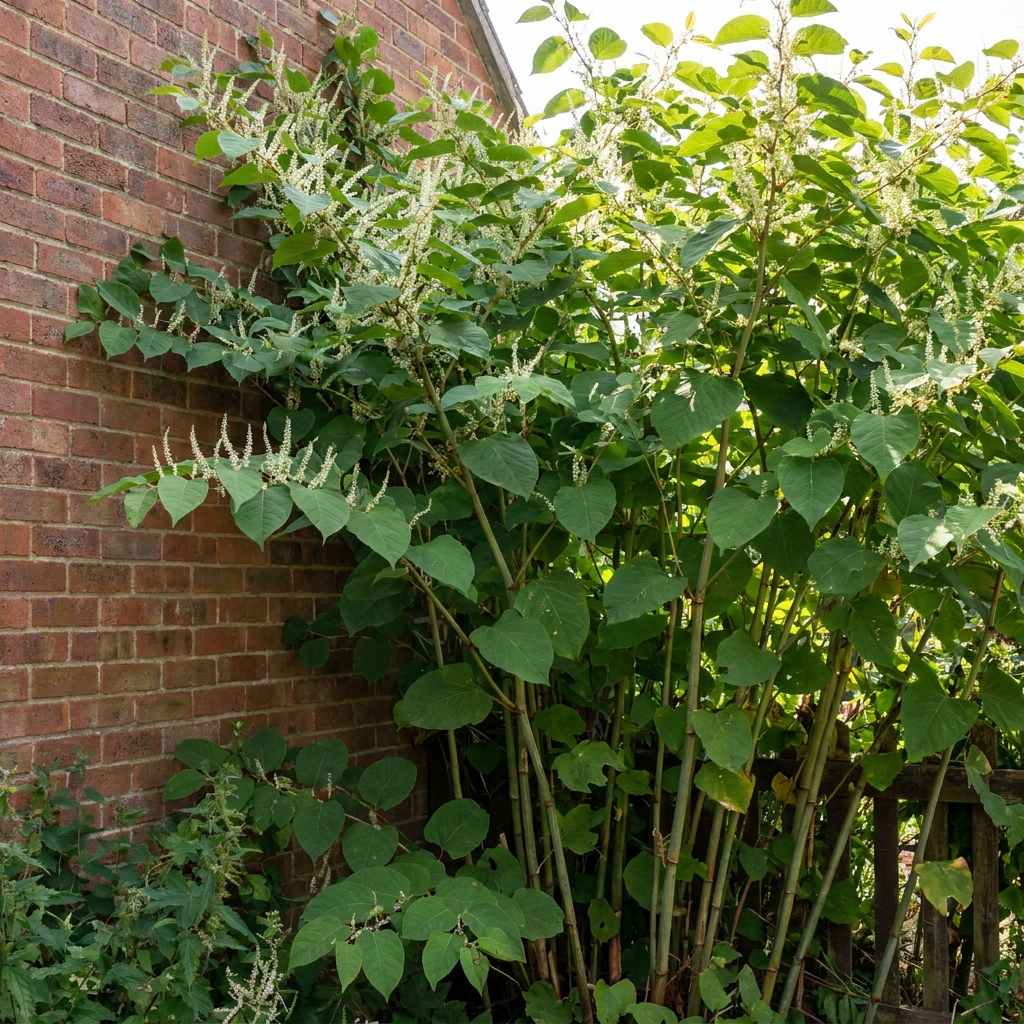
The short answer
In the growing season Japanese knotweed can put on up to around 10cm a day, reaching 2–3 metres by summer. In the UK it spreads only vegetatively — there is no viable seed — so it travels through the rhizome growing through soil, and through fragments of rhizome or cut stem being moved. The single biggest cause of new outbreaks is human disturbance: digging, fly-tipping, moving contaminated soil and dumping garden waste.
Japanese knotweed’s reputation for fast growth is well earned, but “spread’ really means two different things: how quickly the visible canes grow each year, and how the plant colonises new ground over time. This page covers both, and explains why almost every new outbreak can be traced back to human activity rather than the plant moving on its own.
Spread rate at a glance
- Seasonal growth Up to ~10cm per day in late spring/summer
- Height reached 2–3 metres in a single season
- Seed in UK None viable — single female clone
- Natural spread Rhizome growing through soil
- Main cause of new sites Human disturbance — digging, fly-tipping, soil movement
- Regrowth fragment A few grams of rhizome can start a new plant
How fast the canes grow
During the peak of the growing season — late spring into summer — knotweed canes can extend by up to around 10cm a day, which is why a stand seems to appear almost overnight. From the red asparagus-like spring shoots, the plant reaches its full 2–3 metre height within a few months before flowering in late summer and dying back in autumn. This rapid seasonal growth is fuelled by energy stored in the rhizome over winter.
How it colonises new ground
Long-term spread is different from seasonal growth. In the UK, Japanese knotweed does not spread by seed — every plant is a single female clone and sets no viable seed here. Instead it spreads in two ways:
- Natural rhizome growth: the underground stem extends slowly outward through the soil, enlarging an existing stand season by season.
- Fragment dispersal: pieces of rhizome or cut cane — even very small ones — can root and grow if moved to new ground.
Why humans are the main culprit
Because viable seed is absent, knotweed rarely jumps to a distant new site on its own. The vast majority of new outbreaks are caused by human activity that moves rhizome or stem fragments:
| Cause | How it spreads the plant |
|---|---|
| Fly-tipping & dumping garden waste | Discarded canes/rhizome root in new locations |
| Moving contaminated soil | Soil with rhizome fragments carried to building or landscaping sites |
| Digging, rotavating, strimming | Breaks rhizome into pieces that each regrow |
| Watercourses | Fragments washed downstream establish new stands on banks |
This is why moving knotweed-contaminated soil is regulated as controlled waste under the Environmental Protection Act 1990, and why spreading the plant in the wild is an offence under the Wildlife & Countryside Act 1981. See knotweed law in the UK.
What this means in practice
The practical lesson is to leave it alone until it can be dealt with properly. Cutting it back to “tidy” it, or digging it out, almost always makes things worse by creating fragments. The right response is a professional assessment and a planned programme — whether herbicide over several seasons or controlled excavation. See how to kill Japanese knotweed.
Frequently asked questions
How fast does Japanese knotweed grow in summer?
At the peak of the season it can grow up to around 10cm a day, reaching 2–3 metres in a single growing season before flowering in late summer and dying back in autumn.
Does Japanese knotweed spread by seed in the UK?
No. UK plants are a single female clone and do not set viable seed, so spread is entirely vegetative — through rhizome growth and the movement of rhizome or stem fragments.
What is the most common way knotweed spreads to new sites?
Human disturbance — fly-tipping, dumping garden waste, moving contaminated soil, and digging or strimming that breaks the rhizome into fragments. Watercourses can also carry fragments downstream.
Can cutting Japanese knotweed make it spread?
Yes. Cutting, strimming or digging creates rhizome and stem fragments that can each grow into new plants. Control should be planned and carried out by a PCA-accredited specialist.
Sources & further reading
- Environment Agency — Treatment and disposal of invasive non-native plants
- gov.uk — Prevent the spread of harmful invasive and non-native plants
- Wildlife & Countryside Act 1981 — Section 14 and Schedule 9
- Williams v Network Rail Infrastructure Ltd (2018) EWCA Civ 1514
This guide is general information, not a site-specific survey or legal advice. Japanese knotweed treatment and removal should be assessed by a PCA-accredited specialist before you act.