The short answer
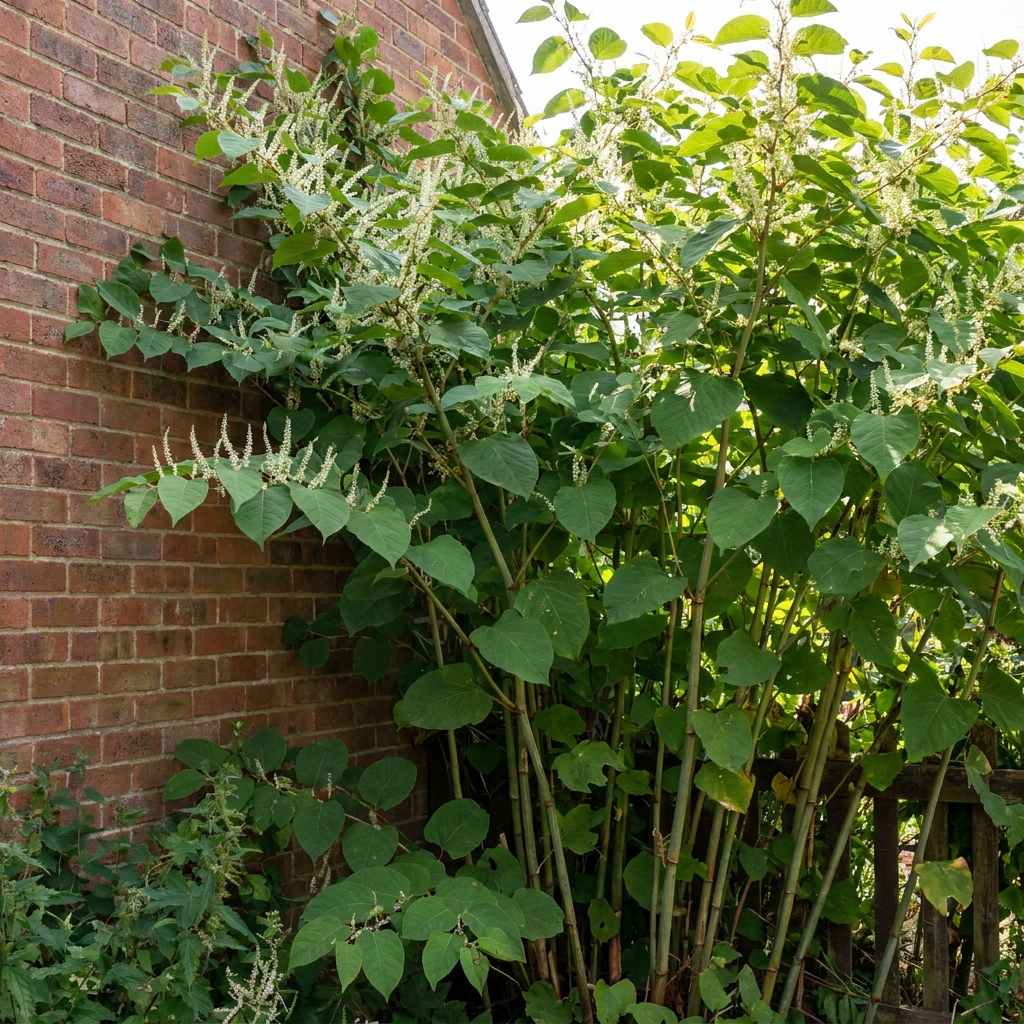
Both Japanese knotweed and bamboo have hollow, jointed canes, but their leaves are completely different: bamboo has long, narrow, grass-like leaves, while knotweed has broad, heart- or shovel-shaped leaves arranged in a zig-zag. Bamboo canes are woody and evergreen and persist year-round; knotweed canes are softer, die back each winter, and are flecked with red or purple. The leaf shape is the quickest reliable test.
Because both plants form clumps of hollow, segmented canes, bamboo is a frequent source of confusion with Japanese knotweed — especially when the knotweed is in full summer growth. The distinction is straightforward once you look beyond the stems to the leaves and the way each plant behaves through the year. This page sets out the key differences.
Knotweed vs bamboo at a glance
- Knotweed leaves Broad, heart/shovel-shaped, zig-zag
- Bamboo leaves Long, narrow, grass-like, pointed
- Knotweed canes Softer, speckled, die back in winter
- Bamboo canes Woody, often evergreen, persist year-round
- Knotweed flowers Creamy-white sprays, late summer
- Bamboo flowers Rare; flowers very infrequently
The leaves settle it
The single quickest test is leaf shape. Bamboo, being a giant grass, has long, narrow, strap-like leaves that taper to a point — clearly grass-like. Japanese knotweed has broad, heart- or shovel-shaped leaves up to around 14cm, arranged in a regular alternating zig-zag along the cane. If the leaves are long and thin, you are looking at bamboo; if they are broad and shield-shaped in a zig-zag, suspect knotweed. Our identification guide covers the leaf pattern in detail.
The canes
Both plants have hollow, jointed canes, which is the root of the confusion. But bamboo canes are woody, rigid and often evergreen, persisting and remaining green or yellow through the year. Knotweed canes are softer and greener with characteristic red or purple speckling, and crucially they die back to brittle brown stems every winter — see knotweed in winter. Bamboo’s year-round woody canes do not.
| Feature | Japanese knotweed | Bamboo |
|---|---|---|
| Leaves | Broad, heart/shovel-shaped, zig-zag | Long, narrow, grass-like |
| Canes | Softer, green with red/purple speckles | Woody, rigid, often evergreen |
| Winter | Dies back to brown brittle canes | Largely persists, stays woody |
| Spread | Rhizome; legally controlled | Some species spread by rhizome too, but not legally controlled |
| Property/legal concern | Significant | Can be a nuisance but not legally controlled as knotweed |
A note on spreading
Some running bamboos are themselves invasive in a garden sense and can spread aggressively by rhizome, which adds to the confusion. However, bamboo is not subject to the same legal controls as Japanese knotweed under the Wildlife & Countryside Act 1981, and it does not carry the same mortgage and sale implications. Knotweed’s rhizome and its legal status are what set it apart — see roots and rhizome.
Frequently asked questions
How do I tell bamboo from Japanese knotweed?
Look at the leaves. Bamboo has long, narrow, grass-like leaves; Japanese knotweed has broad, heart- or shovel-shaped leaves in an alternating zig-zag. Bamboo canes are woody and often evergreen, while knotweed canes are softer, red-speckled and die back in winter.
Is bamboo as damaging as Japanese knotweed?
Some running bamboos spread aggressively and can be a garden nuisance, but bamboo is not subject to the same legal controls as Japanese knotweed and does not carry the same mortgage and sale implications.
Do bamboo and knotweed both die back in winter?
No. Japanese knotweed dies back to brown, brittle canes each winter while its rhizome stays alive underground. Bamboo is largely evergreen and its woody canes persist year-round.
Can I plant bamboo where I removed knotweed?
Removal and replanting decisions are best taken on advice from a PCA-accredited specialist, who can confirm the knotweed has been dealt with first and advise on suitable planting afterwards.
Sources & further reading
- Property Care Association (PCA) — Identification of Japanese knotweed
- Environment Agency — Identify and control invasive non-native plants
- Wildlife & Countryside Act 1981 — Section 14 and Schedule 9
This guide is general information, not a site-specific survey or legal advice. Japanese knotweed treatment and removal should be assessed by a PCA-accredited specialist before you act.