The short answer
In winter Japanese knotweed dies back to brown, hollow, brittle canes that stand or collapse with no leaves, while the rhizome remains alive underground ready to regrow in spring. The dead canes are tall, orange-brown and bamboo-like, often in dense clumps. Because there is no foliage or flower to give it away, winter is the hardest time to spot knotweed — and the dormant canes can be mistaken for, or hidden among, other dead vegetation.
Japanese knotweed is a herbaceous perennial, which means the visible plant dies back every winter while the living part survives below ground. For anyone buying a property in the colder months this matters: the obvious summer growth is gone, and only subtle clues remain. This page explains what to look for in winter and why a dormant stand is still very much alive.
Winter knotweed at a glance
- Above ground Brown, hollow, brittle dead canes; no leaves
- Cane colour Orange-brown, bamboo-like
- Below ground Rhizome alive and dormant, ready to regrow
- Why it’s missed No foliage or flowers; canes blend with dead growth
- Regrowth New red shoots emerge the following spring
- Best survey season Spring to autumn, when growth is visible
What you see above ground
Once the first frosts arrive, the canes lose their leaves, turn from green to a distinctive orange-brown and become dry and brittle. They often remain standing through winter in dense clumps, hollow like bamboo, with the zig-zag growth pattern still visible. Collapsed canes can also form a tangled brown mat over old crowns. Because there is no green foliage and no flower, the plant is far less obvious than in summer.
What is happening below ground
The dormant appearance is deceptive. The plant’s rhizome — its underground stem system — remains alive and stores the energy that will drive the next season’s explosive growth. Killing the visible canes does nothing to the rhizome, which is why winter is not a time to assume a plant is dead or to attempt removal. For more on the root system, see Japanese knotweed roots and rhizome.
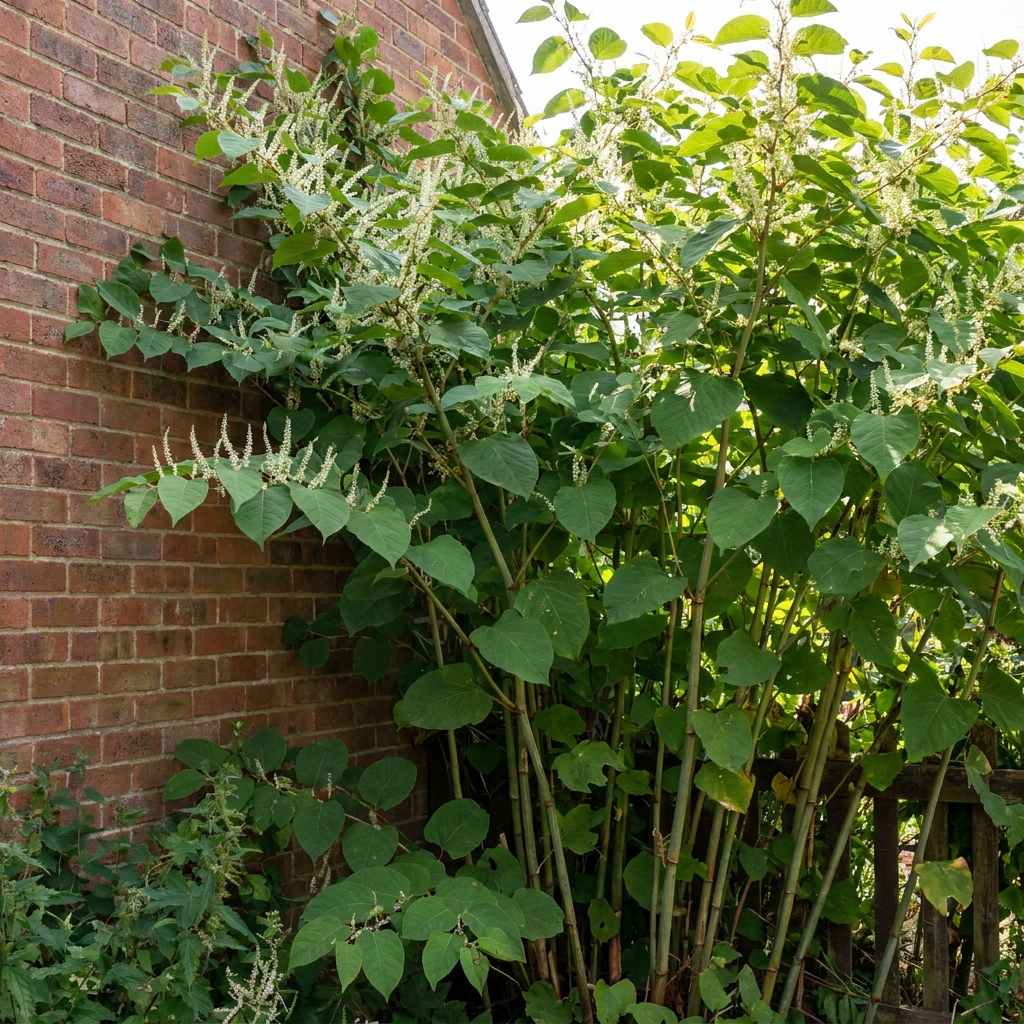
| Feature | Summer | Winter |
|---|---|---|
| Leaves | Large, green, heart-shaped, zig-zag | None — fallen |
| Stems | Green, red-speckled, 2–3m | Brown, hollow, brittle, often collapsed |
| Flowers | Creamy-white sprays (late summer) | None |
| Rhizome | Active, fuelling growth | Dormant but alive |
Why winter makes it easy to miss
The lack of obvious features is exactly why knotweed can slip through a winter property viewing or a poorly timed inspection. A patch of dead brown canes can be mistaken for ordinary garden die-back or cleared before anyone records it. This is one reason surveyors prefer to assess during the growing season, and why a clear answer in winter often needs a specialist who can read the dead canes and old crowns. See our guide to a knotweed survey.
What to do if you spot dormant canes
- Do not cut or pull them. Disturbing the crown or rhizome can spread fragments.
- Photograph and note the location so it can be checked again in spring when new growth appears.
- If buying or selling, commission a survey rather than relying on a winter glance.
- Mark the area and wait for spring shoots to confirm before any treatment is planned.
Frequently asked questions
Does Japanese knotweed die in winter?
No. The above-ground canes die back to brown, hollow, brittle stems, but the rhizome survives underground and regrows in spring. The plant is dormant, not dead.
What colour are Japanese knotweed canes in winter?
They turn orange-brown, become dry and brittle, and are hollow like bamboo. They often remain standing in dense clumps or collapse into a tangled brown mat.
Can you treat Japanese knotweed in winter?
Herbicide treatment is not effective in winter because the plant is dormant and not actively transporting sap to the rhizome. Treatment is planned for the growing season and should be assessed by a PCA-accredited specialist.
Is it harder to spot knotweed in winter?
Yes. With no leaves or flowers, the dead canes can be mistaken for ordinary die-back or cleared before they are recorded, which is why surveyors prefer to assess during the growing season.
Sources & further reading
- Environment Agency — Treatment and disposal of invasive non-native plants
- Property Care Association (PCA) — Identification and management of Japanese knotweed
- Environmental Protection Act 1990 — controlled waste provisions
- gov.uk — How to stop Japanese knotweed from spreading
This guide is general information, not a site-specific survey or legal advice. Japanese knotweed treatment and removal should be assessed by a PCA-accredited specialist before you act.