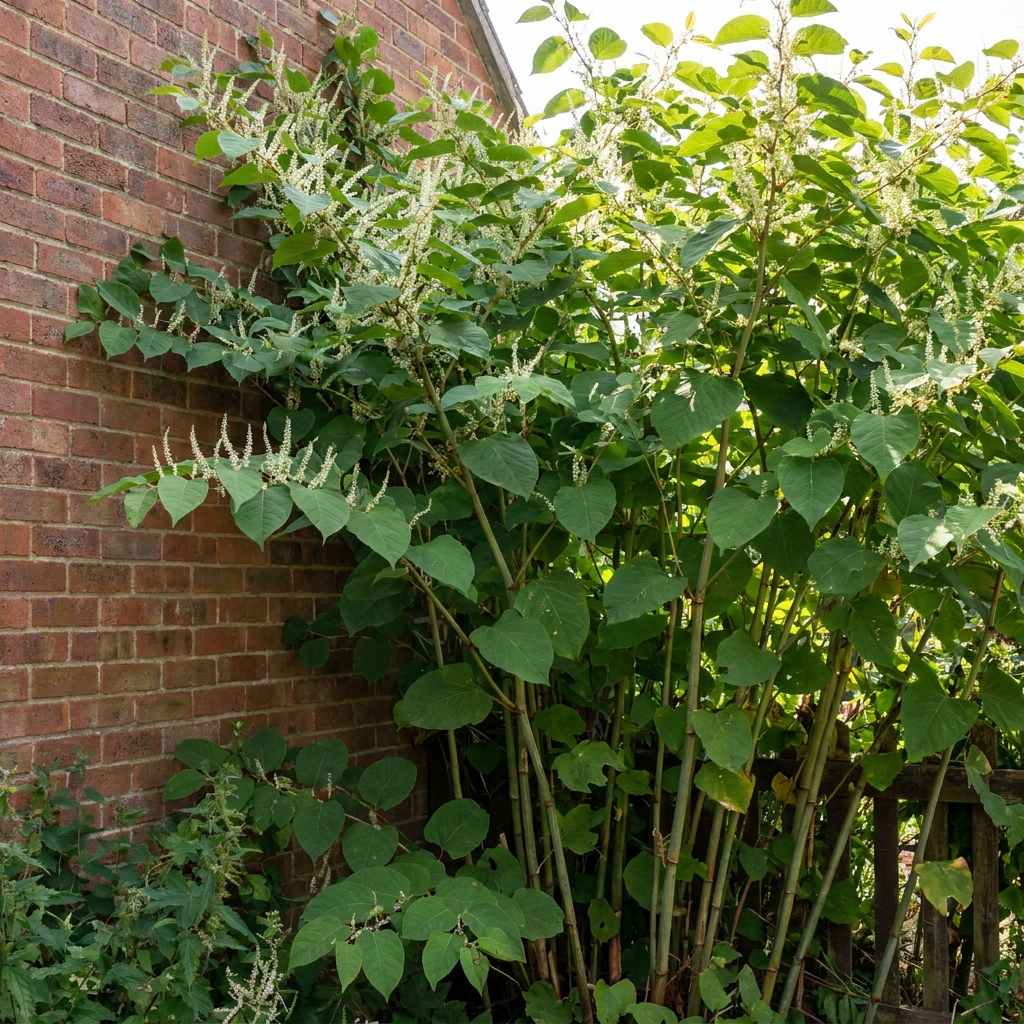
The short answer
Japanese knotweed is classed as controlled waste under the Environmental Protection Act 1990 and must be disposed of at a licensed landfill or by a registered waste carrier. You cannot put it in your household, garden or compost bin, take it to an ordinary recycling centre, or fly-tip it — all of which are offences. Treated or excavated material carries the same duty of care, and breaching it can lead to prosecution and fines.
Disposal is the legal heart of any knotweed job, and the one most likely to catch people out. Because a fragment the size of a fingernail can grow a new plant, the law treats knotweed material as controlled waste with a strict chain of custody. Here is what that means in practice, and why the easy options — the bin, the compost heap, the local tip — are all off the table.
Disposal at a glance
- Legal status Controlled waste – EPA 1990
- Where it goes Licensed landfill / registered carrier
- Household bin Not allowed
- Compost / fly-tip Offence
- Duty of care Applies to all knotweed waste
Why knotweed is controlled waste
Under the Environmental Protection Act 1990, Japanese knotweed plant material and any soil containing rhizome are classed as controlled waste. The reason is simple: it regrows from tiny fragments, so allowing it into the general waste stream would spread it. That single fact dictates everything about how it must be handled.
Where it can — and cannot — go
| Route | Allowed? |
|---|---|
| Licensed landfill | Yes — the correct route |
| Registered waste carrier | Yes — to move it legally |
| On-site burial (with membrane, per code) | Yes — where survey allows |
| Household / garden / compost bin | No |
| Ordinary recycling centre | No (unless it accepts it as controlled waste) |
| Fly-tipping / dumping | No — an offence |
The duty of care
The Environmental Protection Act 1990 imposes a duty of care: whoever produces the waste must ensure it is transferred only to an authorised person and disposed of legally. If you use a contractor, they handle this; if you do it yourself, the duty falls on you. This is one of the strongest practical reasons owners use a PCA-accredited firm — see can I remove it myself.
What this means in practice
If you cut canes during treatment, they must be dried and disposed of correctly or burned where permitted — see burning knotweed. If you excavate, all contaminated soil must go to licensed landfill or be managed on site under the Environment Agency code — see excavation. Either way, keep records of where the waste went; the duty of care can require you to evidence the disposal chain.
This page is general information, not legal advice. For a specific site, follow the Environment Agency code of practice and use registered carriers and licensed facilities.
Frequently asked questions
Can I put Japanese knotweed in my bin?
No. It is controlled waste under the Environmental Protection Act 1990 and cannot go in household, garden or compost bins. It must go to a licensed landfill or be moved by a registered waste carrier.
Is fly-tipping knotweed illegal?
Yes. Fly-tipping controlled waste is an offence that can lead to prosecution and a substantial fine, and dumping knotweed also risks spreading it, which carries further liability.
Can I compost it?
No. Composting will not destroy the rhizome and risks spreading the plant. Knotweed material must be disposed of as controlled waste, not composted.
Who is responsible for legal disposal?
Under the duty of care, the waste producer is responsible. If a contractor does the work they carry this responsibility; if you do it yourself, the duty — and the records — fall on you.
Sources & further reading
- Environmental Protection Act 1990 — controlled waste and duty of care
- gov.uk — Dispose of Japanese knotweed correctly
- Environment Agency — Managing Japanese knotweed on development sites code of practice
- gov.uk — Waste duty of care: code of practice
This guide is general information, not a site-specific survey or legal advice. Japanese knotweed treatment and removal should be assessed by a PCA-accredited specialist before you act.