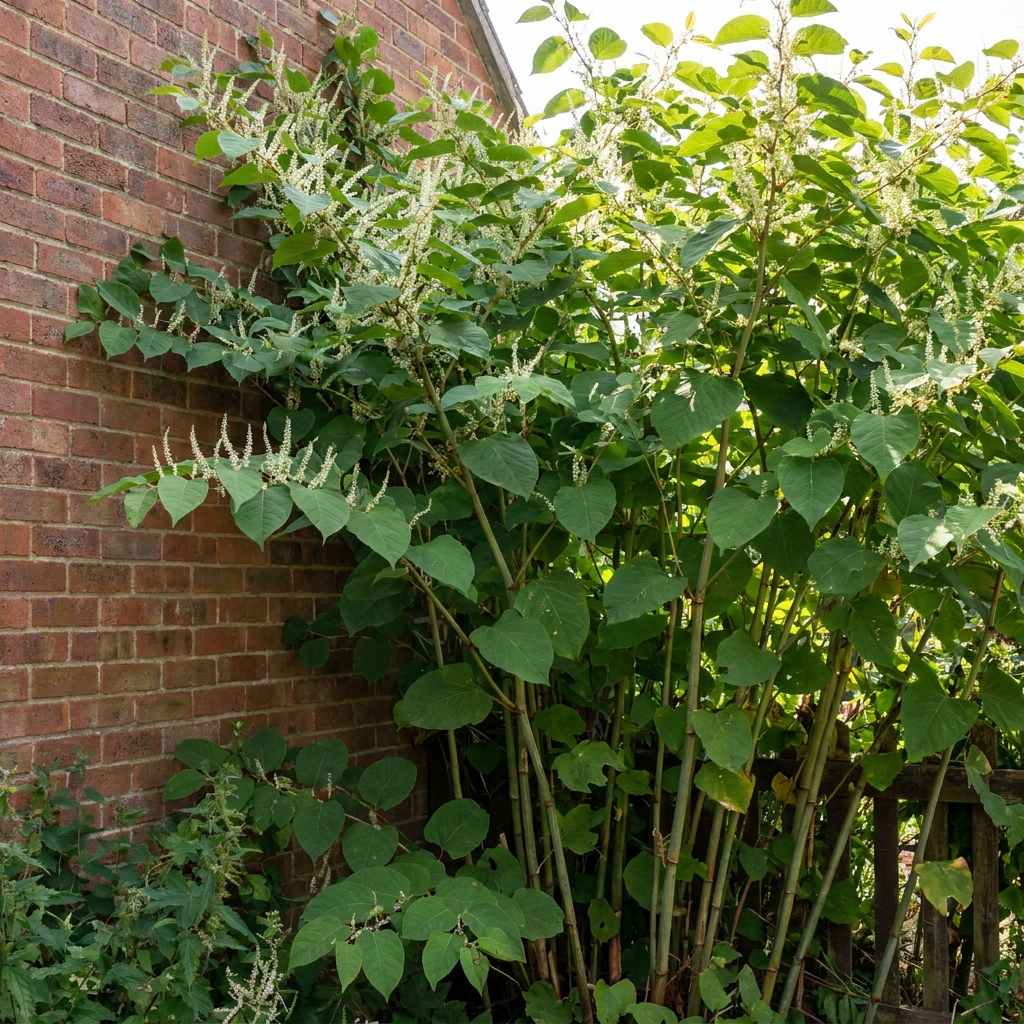
The short answer
Yes, you can legally treat Japanese knotweed on your own land — there is no law forcing you to use a contractor — but doing it yourself is risky. The waste is controlled waste you cannot put in a bin, spreading it can create liability to neighbours, domestic weedkiller rarely achieves a full kill, and a mortgage lender will usually want a professional treatment plan with a guarantee. For these reasons most owners use a PCA-accredited contractor.
It is a fair question, and the honest answer has two halves. Legally, knotweed on your own land is yours to treat — you are not obliged to hire anyone. Practically, the disposal rules, the risk of spreading it, the difficulty of a full kill and what lenders expect all push owners towards a professional. Here is the balanced picture so you can decide.
DIY removal at a glance
- Legal to DIY? Yes, on your own land
- Waste Controlled waste – no bin/compost
- Spread risk Can create neighbour liability
- Full kill Hard with domestic products
- Lenders Usually want a pro plan + IBG
What you can legally do
There is no offence in treating Japanese knotweed on your own property. You are allowed to apply approved weedkiller and to dig on your own land. What the law controls is spreading it and disposing of it — not whether you do the work yourself. Under the Wildlife & Countryside Act 1981 it is an offence to cause it to grow in the wild, and the Anti-social Behaviour, Crime and Policing Act 2014 can be used where it affects others.
Why DIY is risky
- Disposal — cut canes and dug soil are controlled waste under the Environmental Protection Act 1990. You cannot put them in your household, garden or compost bin; they must go to a licensed facility. See disposal rules.
- Spread liability — careless cutting or moving soil can spread the plant onto a neighbour’s land, exposing you to an encroachment claim.
- Incomplete kill — domestic glyphosate is usually too weak, and timing the application is easy to get wrong; see glyphosate.
- Mortgage — lenders typically want a documented plan and insurance-backed guarantee from a PCA-accredited firm.
| DIY | Professional |
|---|---|
| No labour cost | Costs £1,500–£3,000+ |
| You handle waste & risk | Legal disposal included |
| No guarantee for lenders | Insurance-backed guarantee |
| Full kill uncertain | Documented monitoring |
When DIY might be reasonable
For a small, isolated stand well away from boundaries, with no sale or mortgage pending and where you can dispose of waste legally, careful repeated glyphosate treatment can be defensible. But if there is any boundary, sale or lending involved, the professional route is almost always the safer choice. For the options, see how to kill knotweed.
This page is general information, not legal advice. If a sale, mortgage or neighbour is involved, take professional advice before acting.
Frequently asked questions
Is it illegal to remove knotweed myself?
No. You can legally treat and remove Japanese knotweed on your own land. What is controlled is spreading it into the wild or onto others’ land, and how you dispose of the waste.
Can I put knotweed in my green bin?
No. Cut canes and dug soil are controlled waste under the Environmental Protection Act 1990. They cannot go in household, garden or compost bins and must go to a licensed disposal facility.
Will DIY treatment satisfy my mortgage lender?
Usually not. Lenders typically want a documented treatment plan and insurance-backed guarantee from a PCA-accredited contractor, which DIY treatment cannot provide.
Could I be sued for spreading it?
Yes. If your actions spread knotweed onto a neighbour’s land you could face an encroachment or nuisance claim. Disturbing the plant without expertise increases the risk of spread.
Sources & further reading
- gov.uk — Prevent the spread of Japanese knotweed (your responsibilities)
- Environmental Protection Act 1990 — controlled waste duty of care
- Williams v Network Rail Infrastructure Ltd (2018, Court of Appeal)
- Anti-social Behaviour, Crime and Policing Act 2014 — community protection notices
This guide is general information, not a site-specific survey or legal advice. Japanese knotweed treatment and removal should be assessed by a PCA-accredited specialist before you act.