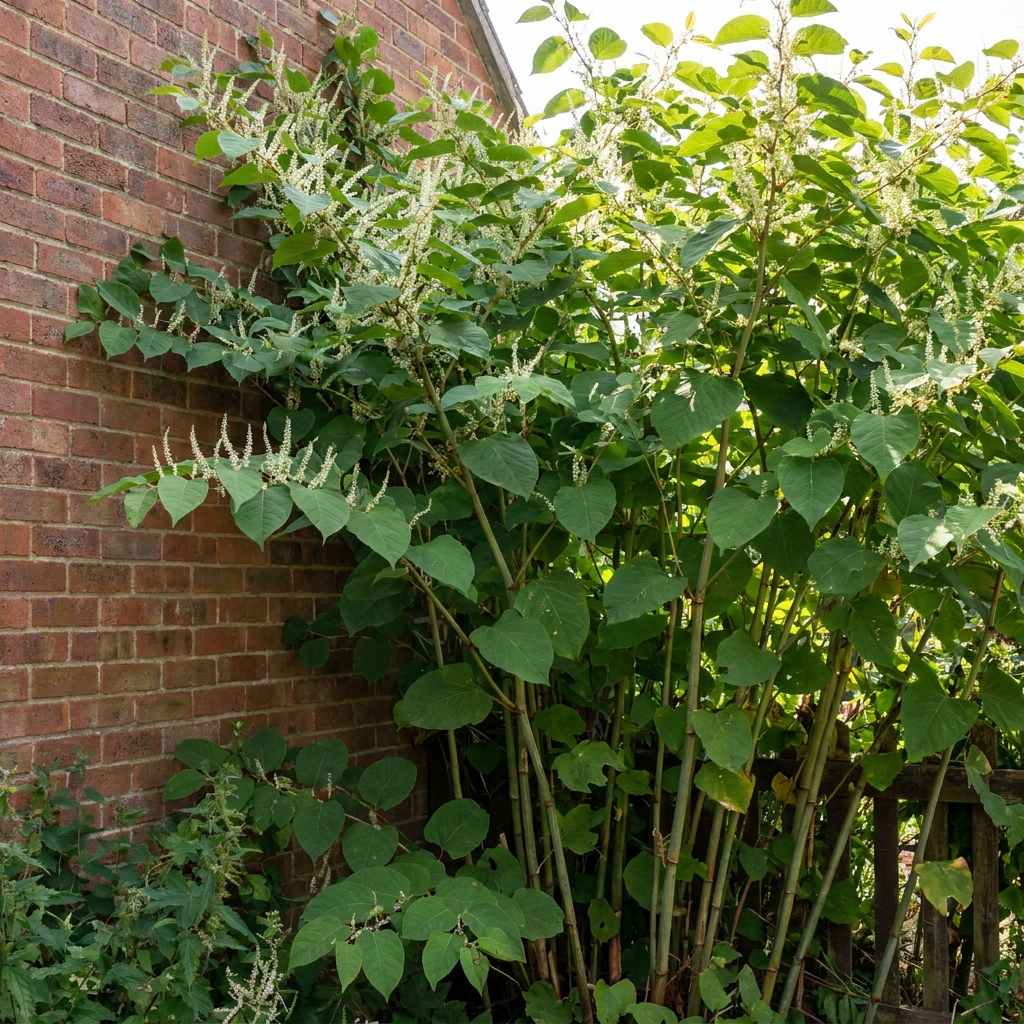
The short answer
Williams v Network Rail Infrastructure Ltd [2018] EWCA Civ 1514 is the leading UK knotweed authority. Two homeowners had knotweed encroaching from a railway embankment behind their homes. The Court of Appeal held this was an actionable private nuisance: the rhizome imposes an immediate burden on the land and interferes with its use, enjoyment and amenity, even without structural damage. It is the case relied on whenever knotweed spreads from a railway, council or other large landowner.
If you have read that you can sue when a neighbour’s knotweed crosses your boundary, this is the case that says so. Williams v Network Rail is short, important and frequently misquoted, so it is worth understanding exactly what the Court of Appeal decided – and what it did not. It matters most where the source is a large institutional landowner such as a railway operator or a council.
The case at a glance
- Citation [2018] EWCA Civ 1514
- Court Court of Appeal
- Claimants Two adjoining homeowners
- Defendant Network Rail (embankment owner)
- Cause of action Private nuisance (encroachment)
- Key holding Encroachment actionable without damage
The facts
Mr Williams and Mr Waistell owned neighbouring bungalows. Behind them ran a Network Rail embankment, infested with Japanese knotweed estimated to have been present for decades. The rhizome had encroached beneath the claimants’ properties. They sued Network Rail in private nuisance. There was no evidence that the knotweed had yet caused physical damage to their buildings, which is what made the case legally interesting.
What the Court of Appeal decided
The court explained that private nuisance can take three forms: encroachment, physical injury to the land, and interference with quiet enjoyment. It held that the presence of knotweed rhizome on the claimants’ land was an actionable encroachment. The reasoning is the part worth remembering: the rhizome imposes an immediate burden because it makes the land harder and more costly to develop, it is a natural hazard, and it interferes with the owner’s ability to use and enjoy the land and with its amenity value. So a claimant does not have to wait for cracked foundations to sue.
What it means for claims against large landowners
Railways, councils and other institutional owners hold vast lengths of embankment, verge and scrub where knotweed thrives. Williams confirms they are not immune: where their knotweed encroaches onto private land and they knew or ought to have known of it and failed to act reasonably, they can be liable. The heads of loss mirror any encroachment claim – treatment, survey, amenity damages and residual diminution.
| Element | How Williams treats it |
|---|---|
| Damage needed? | No – encroachment of rhizome is enough. |
| Basis of liability | Interference with use, enjoyment and amenity. |
| Defendant’s knowledge | Liable where it knew or ought to have known and failed to act. |
| Remedy | Damages for treatment, survey, amenity and diminution. |
Using the case in practice
- Identify the responsible landowner and prove encroachment with a survey.
- Work the escalation ladder – report and request action before issuing proceedings.
- On time limits and representation, see when to instruct a solicitor.
Frequently asked questions
What did Williams v Network Rail decide?
The Court of Appeal held that Japanese knotweed rhizome encroaching from one property onto another is an actionable private nuisance because it interferes with the owner’s use, enjoyment and amenity of the land – even without any physical damage to buildings.
Can I sue Network Rail or my council for knotweed?
Potentially yes, where their knotweed has encroached onto your land and they knew or ought to have known of it and failed to take reasonable steps. Williams v Network Rail is the authority that establishes this.
Does the case mean knotweed within 7 metres is automatically a claim?
No. The actionable harm is encroachment onto your land, not proximity. The “7-metre rule” was a surveying convention that has since been relaxed; it is not the legal test.
What damages did the claimants get?
Each recovered the cost of a treatment package, a survey cost, annual damages for loss of amenity, and a sum for residual diminution in value once treatment was complete – the figures depending on the facts.
Sources & further reading
- Williams v Network Rail Infrastructure Ltd [2018] EWCA Civ 1514 (Court of Appeal judgment)
- RICS — Japanese knotweed and residential property guidance note (2022)
- gov.uk — Prevent Japanese knotweed from spreading
This guide is general information, not a site-specific survey or legal advice. Japanese knotweed treatment and removal should be assessed by a PCA-accredited specialist before you act.