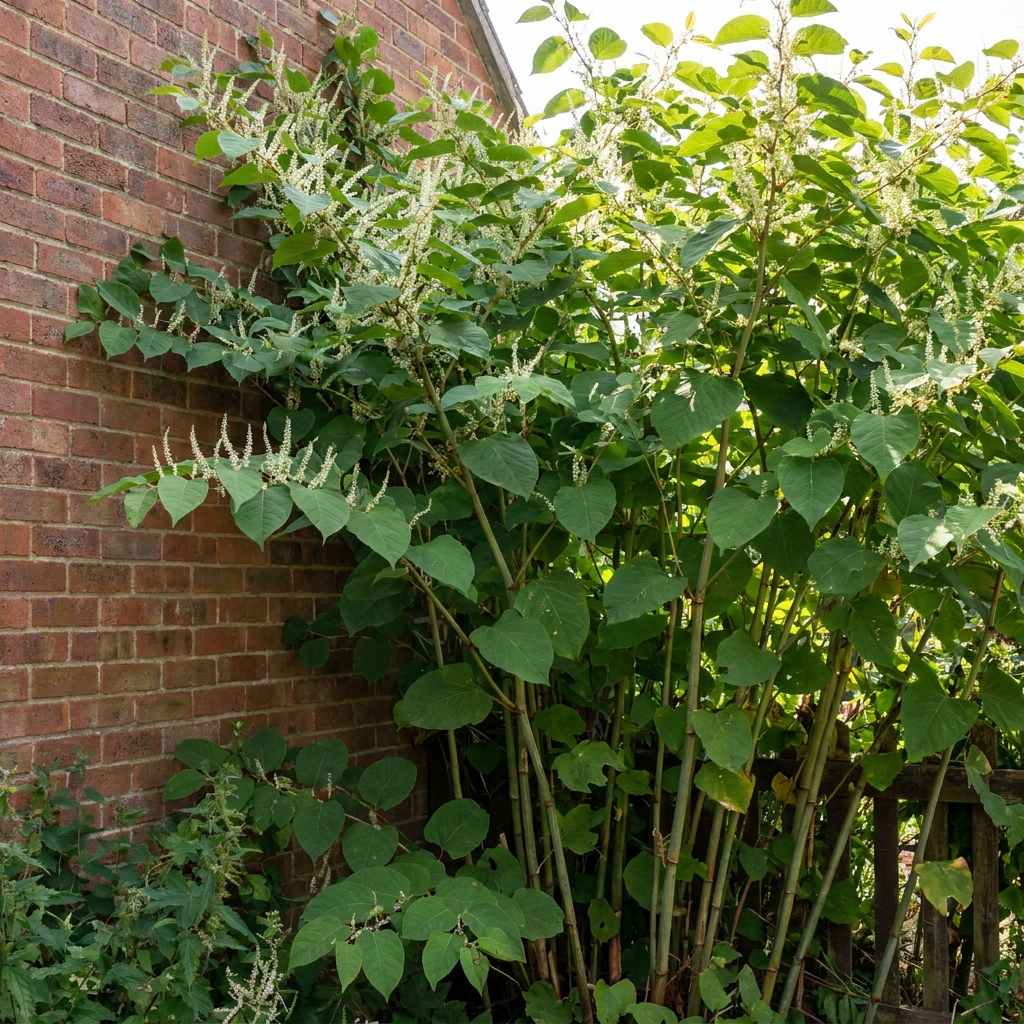
The short answer
The old ‘7-metre rule’ was a rule of thumb – not law – that treated knotweed within 7 metres of a building as a serious mortgage problem. The 2022 RICS guidance note relaxed it. Assessment is now risk-based, using RICS management categories A–D that weigh proximity and actual impact on the property. The 7-metre distance survives only as one input, not an automatic devaluation trigger.
For years, ‘7 metres’ was shorthand for knotweed trouble: if the plant was within seven metres of a habitable building, valuers and lenders treated it as a red flag. That blunt test was always more rule of thumb than science, and in 2022 the RICS replaced it with a more proportionate framework. This guide sets the record straight on what the rule was, why it was relaxed, and how knotweed is assessed today.
The 7-metre rule at a glance
- Was it law? No – a surveying rule of thumb
- Original threshold Knotweed within 7m of a building
- Changed by RICS guidance note (2022)
- Replaced with Risk-based categories A–D
- Is 7m still used? Yes, as one factor only
- Effect Less automatic devaluation
Where the 7-metre rule came from
The seven-metre figure originated in earlier RICS guidance as a precautionary screening distance: Japanese knotweed rhizome can extend some way underground, and seven metres was adopted as a conservative trigger for further investigation. Crucially, it was never a statutory rule – just an industry rule of thumb. Over time it hardened into a near-automatic assumption that any knotweed within seven metres made a property hard to mortgage, which often overstated the real risk.
What the 2022 RICS guidance changed
The RICS guidance note “Japanese knotweed and residential property” (2022) deliberately moved away from the rigid distance test toward a risk-based assessment. Instead of asking only “is it within seven metres?”, the surveyor now considers proximity together with the actual or likely impact on the building and amenity, and assigns a management category:
| Category | Meaning |
|---|---|
| A | Knotweed within 7m and affecting the dwelling or outbuildings |
| B | Within 7m but not affecting the main building |
| C | Present but more than 7m from the dwelling |
| D | Dead or fully treated, no current viable rhizome |
Distance still features – the 7-metre threshold separates the categories – but it is now one input within a judgement about impact, not an automatic verdict. For the full breakdown, see our guide to the RICS categories.
What it means for you today
- Knotweed within seven metres is not an automatic bar to a mortgage.
- The category and whether a treatment plan and IBG exist drive the outcome.
- The change reduced blanket devaluation and brought valuations closer to real risk – see how knotweed affects value.
In practice, a managed category-A or B infestation with a plan and insurance-backed guarantee is usually mortgageable – see mortgages and knotweed. This is general information, not a survey or valuation; a RICS valuer assesses the category for your specific property.
Frequently asked questions
Is the 7-metre rule still in force?
Not as a rigid rule. The 2022 RICS guidance replaced the automatic 7-metre test with risk-based categories A–D. The seven-metre distance still helps separate the categories, but it is one factor, not an automatic devaluation trigger.
Was the 7-metre rule ever a legal requirement?
No. It was always a surveying rule of thumb – a precautionary screening distance – not a statutory rule. It simply became widely used until the 2022 guidance set out a more proportionate approach.
Does knotweed within 7 metres make a house unmortgageable?
Not automatically. Most properties with knotweed within seven metres are still mortgageable, especially with a PCA-accredited treatment plan and an insurance-backed guarantee. The lender assesses the RICS category and the management in place.
Why was the 7-metre rule relaxed?
Because it often overstated the real risk, leading to blanket devaluation and refused mortgages on cases that were actually manageable. The 2022 RICS guidance introduced categories A–D so assessment reflects actual impact, not just distance.
Sources & further reading
- RICS — Japanese knotweed and residential property, guidance note (2022)
- Property Care Association (PCA) — surveys & management categories
- UK Finance — Mortgage Lenders’ Handbook
- gov.uk — Prevent Japanese knotweed from spreading
This guide is general information, not a site-specific survey or legal advice. Japanese knotweed treatment and removal should be assessed by a PCA-accredited specialist before you act.