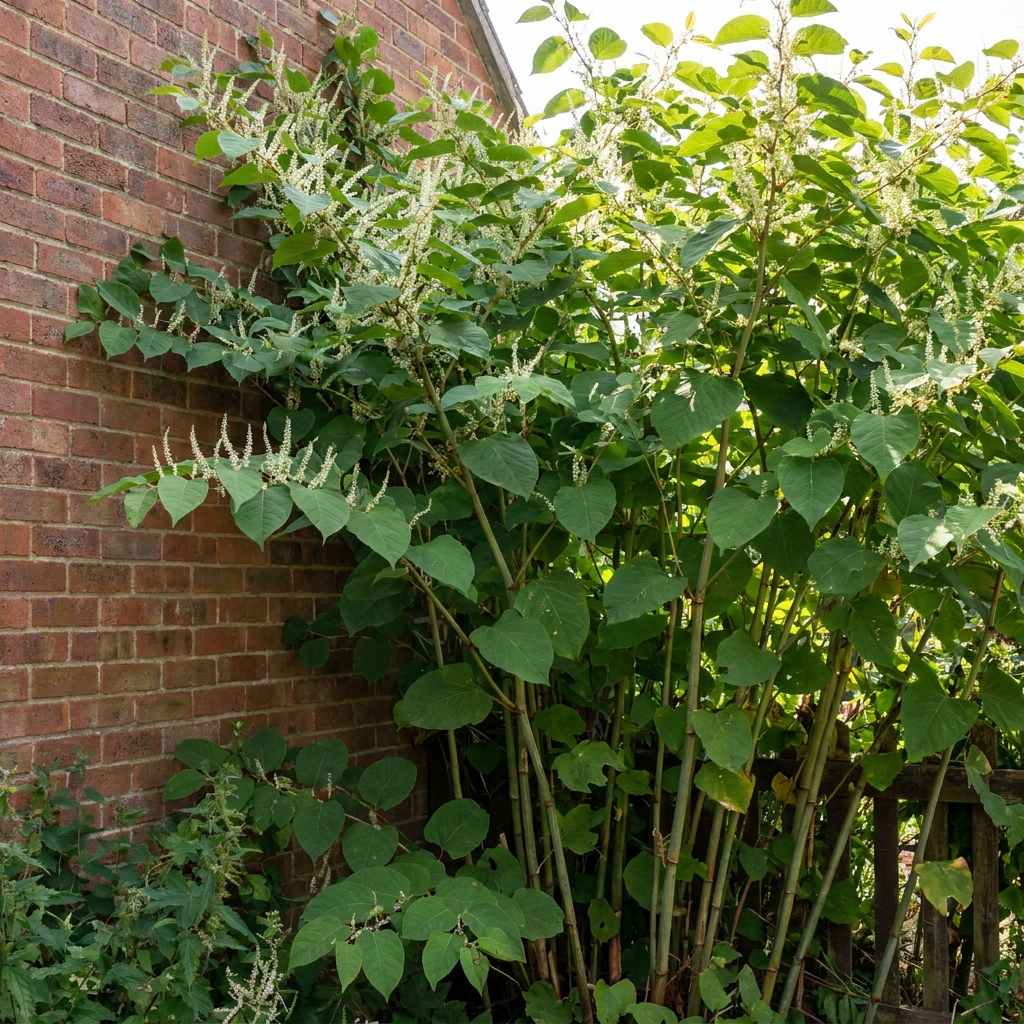
The short answer
There is no fixed devaluation figure for Japanese knotweed. Since the 2022 RICS guidance, surveyors assess the impact case by case as a ‘diminution in value’ – broadly the cost of treatment plus any residual market stigma – rather than applying an automatic write-down. A well-managed infestation with a plan and insurance-backed guarantee typically has a modest, defined impact; an untreated, severe stand close to the house has more.
“How much will knotweed knock off the value?” is the question every owner and buyer asks. The honest answer is that it depends – and that the way surveyors answer it changed with the 2022 RICS guidance note. The old assumption of a blanket percentage hit has given way to a proportionate, evidence-based view. This guide explains the concept of diminution in value, what drives it, and how to limit it.
Knotweed and value at a glance
- Fixed % devaluation? No – assessed case by case
- Valuation concept Diminution in value
- Main drivers Treatment cost + stigma
- Since 2022 Risk-based, not automatic
- Biggest lever A plan + IBG in place
- Survey/report cost £150–£350
What ‘diminution in value’ means
Surveyors do not apply a flat percentage. Instead they assess the diminution in value – the difference between what the property would be worth without knotweed and its value with the infestation and its baggage. That figure has two broad components: the cost of putting the problem right, and any residual stigma – the market’s lingering wariness even after treatment. The 2022 RICS guidance pushed valuers toward this proportionate approach and away from the old ‘7-metre, automatic devaluation’ mindset – see our explainer on the 7-metre rule and its relaxation.
What actually drives the impact
- RICS category (A–D): proximity to and impact on buildings.
- Treatment cost: a herbicide programme is far cheaper than excavation.
- Whether a plan and IBG exist: a managed, guaranteed infestation reassures buyers and lenders.
- Residual stigma: harder to quantify, generally fades as the treatment record lengthens.
| Treatment route | Indicative cost | Effect on value impact |
|---|---|---|
| Herbicide programme (3 seasons) | £1,500–£3,000 | Lower – slower but inexpensive |
| Excavation / dig-and-dump | £5,000–£15,000+ | Higher upfront, but fast resolution |
| Survey / management report | £150–£350 | Enables an accurate valuation |
How to limit the impact
The most effective lever is to convert an open-ended worry into a defined, funded process. Commissioning a PCA-accredited management plan with an insurance-backed guarantee caps the uncertainty: buyers and lenders see a known cost and a protected outcome, which both supports the price and keeps the property mortgageable. Honest disclosure plus a plan generally protects value far better than hoping the problem goes unnoticed.
The bottom line
Knotweed has a value impact, but it is no longer the automatic disaster it was once portrayed as. A managed infestation often costs a few thousand pounds to resolve and leaves a perfectly saleable home. This is general information, not a formal valuation – instruct a RICS valuer and a PCA-accredited specialist for figures specific to your property.
Frequently asked questions
Does Japanese knotweed always reduce a house’s value?
Usually there is some effect, but it is no longer a fixed percentage. Since the 2022 RICS guidance, surveyors assess a proportionate diminution in value – broadly the treatment cost plus any residual stigma – rather than applying an automatic write-down.
Is it true knotweed wipes 20% off a property?
That kind of blanket figure pre-dates the 2022 RICS guidance and overstates the modern position. Today the impact reflects the actual treatment cost and RICS category, so for a managed infestation it is often far smaller.
Does having a treatment plan improve the value?
Yes. A PCA-accredited plan with an insurance-backed guarantee converts an open-ended worry into a known, funded process. That reassures buyers and lenders and generally supports the price far better than leaving it untreated.
Who decides how much value is lost?
A RICS valuer assesses the diminution in value for mortgage and sale purposes, drawing on a PCA-accredited survey for the category and treatment cost. It is a professional judgement specific to the property, not a standard figure.
Sources & further reading
- RICS — Japanese knotweed and residential property, guidance note (2022)
- Property Care Association (PCA) — treatment programmes & guarantees
- UK Finance — Mortgage Lenders’ Handbook
- gov.uk — Prevent Japanese knotweed from spreading
This guide is general information, not a site-specific survey or legal advice. Japanese knotweed treatment and removal should be assessed by a PCA-accredited specialist before you act.