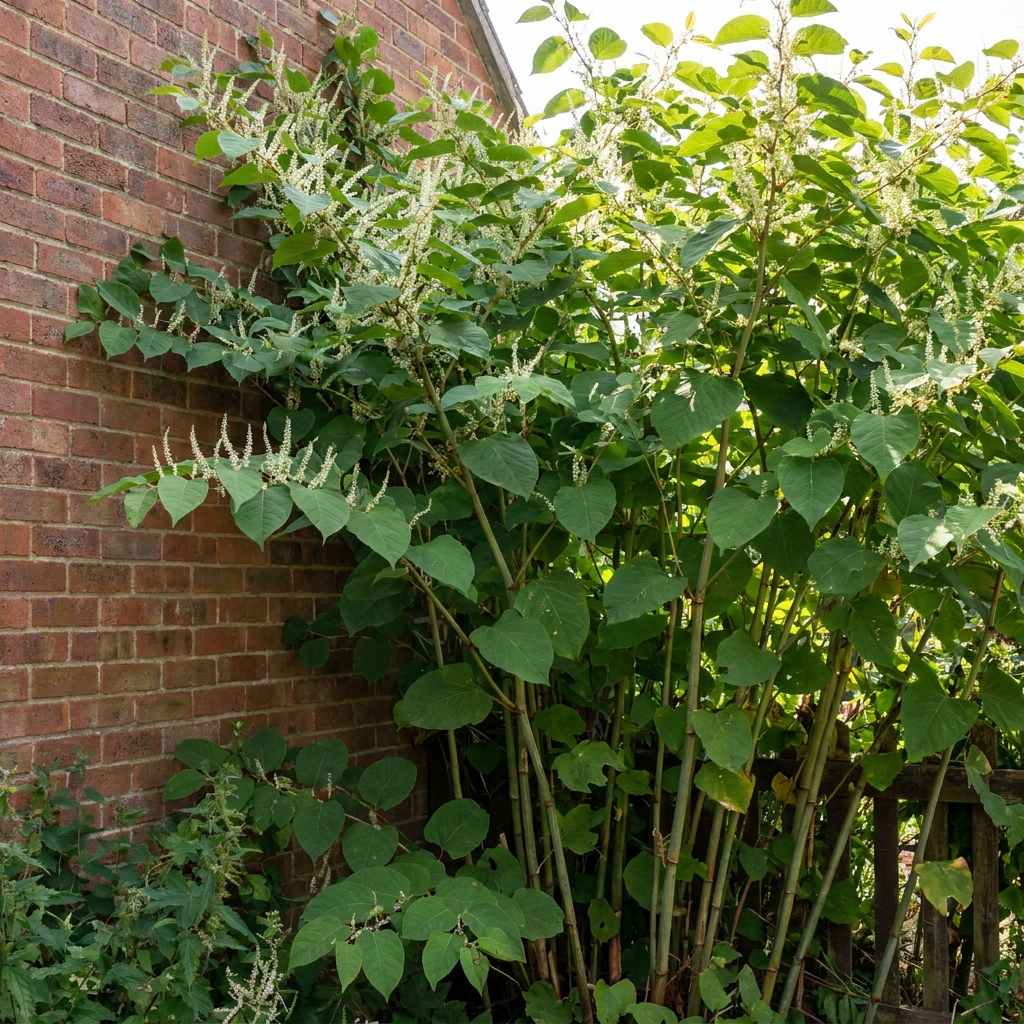
The short answer
For private gardens there is generally little or no government grant funding to treat Japanese knotweed — the cost normally falls to the landowner. Government and the Environment Agency focus on preventing spread and proper disposal rather than subsidising private treatment. Limited help can exist through occasional local schemes, encroachment claims against a neighbour, or where knotweed spread from public land — but no general grant applies.
It is a reasonable hope: surely there is funding to help deal with an invasive plant you did not introduce? For most homeowners the honest answer is no. This page sets out the real position on grants, why public money is targeted elsewhere, and the genuine routes to help or recovery that do exist — without raising false expectations.
Grants and help at a glance
- Government grant Generally none for private gardens
- Who pays Normally the landowner
- Public focus Preventing spread & proper disposal
- Possible recovery Encroachment claim if it spread from next door
- Worth checking Occasional local or housing schemes
The honest position: no general grant
There is no national grant scheme that pays private homeowners to treat Japanese knotweed in their own garden. The cost of a survey and treatment normally falls to the landowner. Public policy — through gov.uk and the Environment Agency — concentrates on stopping knotweed spreading and ensuring waste is disposed of correctly, not on subsidising treatment on private land.
Why public money is targeted elsewhere
The law places responsibility on landowners: you must not allow knotweed to spread into the wild or onto neighbouring land. The Environment Agency’s role is regulatory — how knotweed and contaminated soil must be handled — rather than financial support. That is why grants are scarce.
Where help genuinely exists
- Encroachment from a neighbour: if knotweed spread onto your land from adjoining property, you may have a claim for the cost of treatment — see encroachment claims and the Williams v Network Rail authority.
- Spread from public land: if it came from a council verge, railway or other public landowner, you may be able to recover costs from that body.
- Local or housing schemes: some councils or social landlords occasionally run treatment programmes or support — worth asking, but do not count on it.
- Seller disclosure: if you bought a home where knotweed was not disclosed, you may have a route against the seller; take legal advice.
| Situation | Realistic help |
|---|---|
| Knotweed in your own garden | Usually self-funded |
| Spread from a neighbour | Possible encroachment claim |
| Spread from public land | Possible cost recovery from that body |
| Undisclosed at purchase | Possible claim against the seller |
The practical takeaway
Budget on the basis that you will fund treatment yourself, then pursue recovery separately if your case fits one of the routes above. Because treatment is cheaper than excavation, a herbicide programme keeps the cost manageable — see treatment vs removal and removal cost.
Frequently asked questions
Can I get a government grant to treat knotweed?
Generally no — there is no national scheme funding private-garden treatment; the cost normally falls to the landowner.
Can I claim if knotweed spread from next door?
Possibly — an encroachment claim may let you recover treatment costs from a neighbour whose knotweed crossed the boundary.
What if it came from council or railway land?
You may be able to recover costs from the public landowner; the leading authority is Williams v Network Rail (2018).
Do any councils help with knotweed?
Some occasionally run schemes or offer advice, but there is no guaranteed support — ask your local authority and don’t rely on it.
Sources & further reading
- GOV.UK — Prevent Japanese knotweed from spreading
- Environment Agency — managing invasive non-native plants
- Williams v Network Rail Infrastructure Ltd (2018, Court of Appeal)
- Anti-social Behaviour, Crime and Policing Act 2014 — community protection
This guide is general information, not a site-specific survey or legal advice. Japanese knotweed treatment and removal should be assessed by a PCA-accredited specialist before you act.