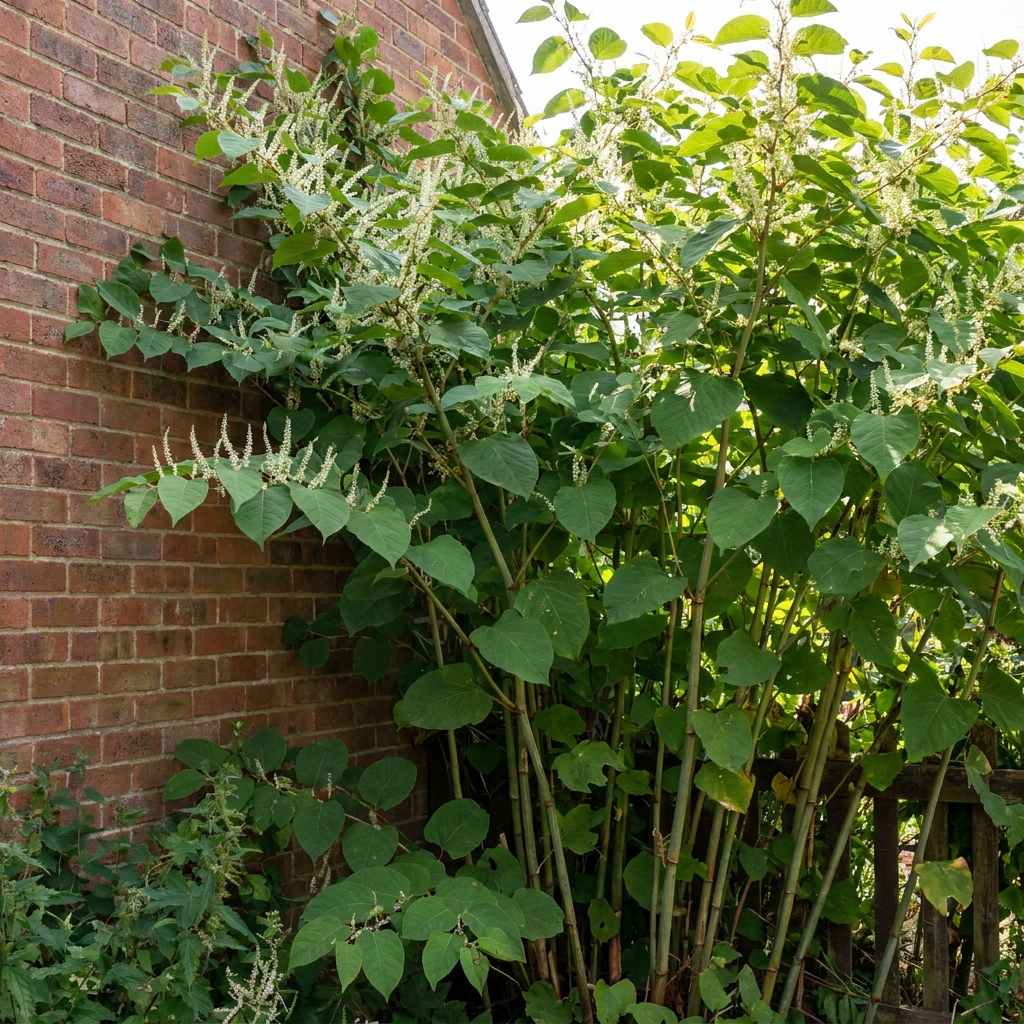
The short answer
A council cannot generally be forced to remove knotweed, but it can use the Anti-social Behaviour, Crime and Policing Act 2014 to make others control theirs. Where knotweed is having a detrimental effect on a community’s quality of life, the council or police can issue a Community Protection Notice (CPN) requiring the landowner to act, with a fine for breach. If the knotweed is on the council’s own land and encroaches onto yours, it can be liable in nuisance just like any landowner.
People often want the council to “sort out” knotweed, but the council’s role is more nuanced. It is principally an enforcer – it can compel a private landowner to control a nuisance plant – rather than a remover of last resort. At the same time, when a council owns the affected land, it carries the same legal responsibilities as any other owner. This guide explains both sides.
Councils and knotweed at a glance
- Main power Community Protection Notice (2014 Act)
- CPN trigger Detrimental effect on quality of life
- Who can issue Council or police (not you directly)
- Breach of CPN Fixed penalty or prosecution
- Council-owned land Liable in nuisance like any owner
- Duty to remove generally? No general duty to remove knotweed
The council as enforcer: the CPN
The principal tool is the Community Protection Notice under the Anti-social Behaviour, Crime and Policing Act 2014. A council (or the police) can issue a CPN where conduct – here, failing to control knotweed – is having a detrimental effect of a persistent or continuing nature on the quality of life of those in the locality, and it is unreasonable. The notice can require the recipient to take steps to control or treat the plant. Breaching a CPN can lead to a fixed penalty notice or prosecution.
You cannot serve a CPN yourself. You report the problem to your local authority with evidence – ideally a survey and dated photographs – and ask it to consider enforcement against the responsible landowner. The decision to issue is the council’s.
What a council cannot be made to do
- It is generally under no duty to remove knotweed from private land or to fund treatment for residents.
- It cannot be compelled to issue a CPN – that is a discretionary enforcement decision.
- It is not a free knotweed-removal service; treatment of your own land remains your responsibility.
When the council is the landowner
The picture changes when the knotweed is on land the council owns – a verge, a park or an embankment – and encroaches onto your property. Then the council is in the same position as any landowner under Williams v Network Rail: rhizome encroaching onto your land can be an actionable private nuisance, and the council can be liable for treatment costs and damages. The same escalation ladder applies, and the claim is built the same way as any encroachment claim.
How to engage the council effectively
| Situation | What to ask the council to do |
|---|---|
| A neighbour ignores their knotweed | Consider a Community Protection Notice under the 2014 Act. |
| Knotweed on a council verge or park encroaches onto you | Treat it and consider your encroachment claim. |
| Fly-tipped knotweed waste nearby | Report as fly-tipping / controlled-waste offence. |
Whichever route applies, lead with evidence. A council acts faster on a documented, surveyed report than on an informal complaint.
Frequently asked questions
Can I make the council remove knotweed?
Generally no. A council has no general duty to remove knotweed from private land. Its main role is enforcement – it can issue a Community Protection Notice requiring a landowner to control knotweed that affects others.
What is a Community Protection Notice?
A CPN is a notice under the Anti-social Behaviour, Crime and Policing Act 2014 that a council or police can issue where knotweed is having a detrimental, persistent effect on a neighbour’s quality of life, requiring the landowner to control it. Breach can mean a fine or prosecution.
Is the council liable if its knotweed spreads to me?
Yes, potentially. Where knotweed on council-owned land encroaches onto yours, the council can be liable in private nuisance under Williams v Network Rail, just like any other landowner.
Can I issue a CPN against my neighbour myself?
No. Only a council or the police can issue a CPN. You report the problem with evidence and ask the authority to consider enforcement.
Sources & further reading
- Anti-social Behaviour, Crime and Policing Act 2014 (Community Protection Notices)
- gov.uk — Prevent Japanese knotweed from spreading
- Williams v Network Rail Infrastructure Ltd [2018] EWCA Civ 1514
- RICS — Japanese knotweed and residential property guidance note (2022)
This guide is general information, not a site-specific survey or legal advice. Japanese knotweed treatment and removal should be assessed by a PCA-accredited specialist before you act.