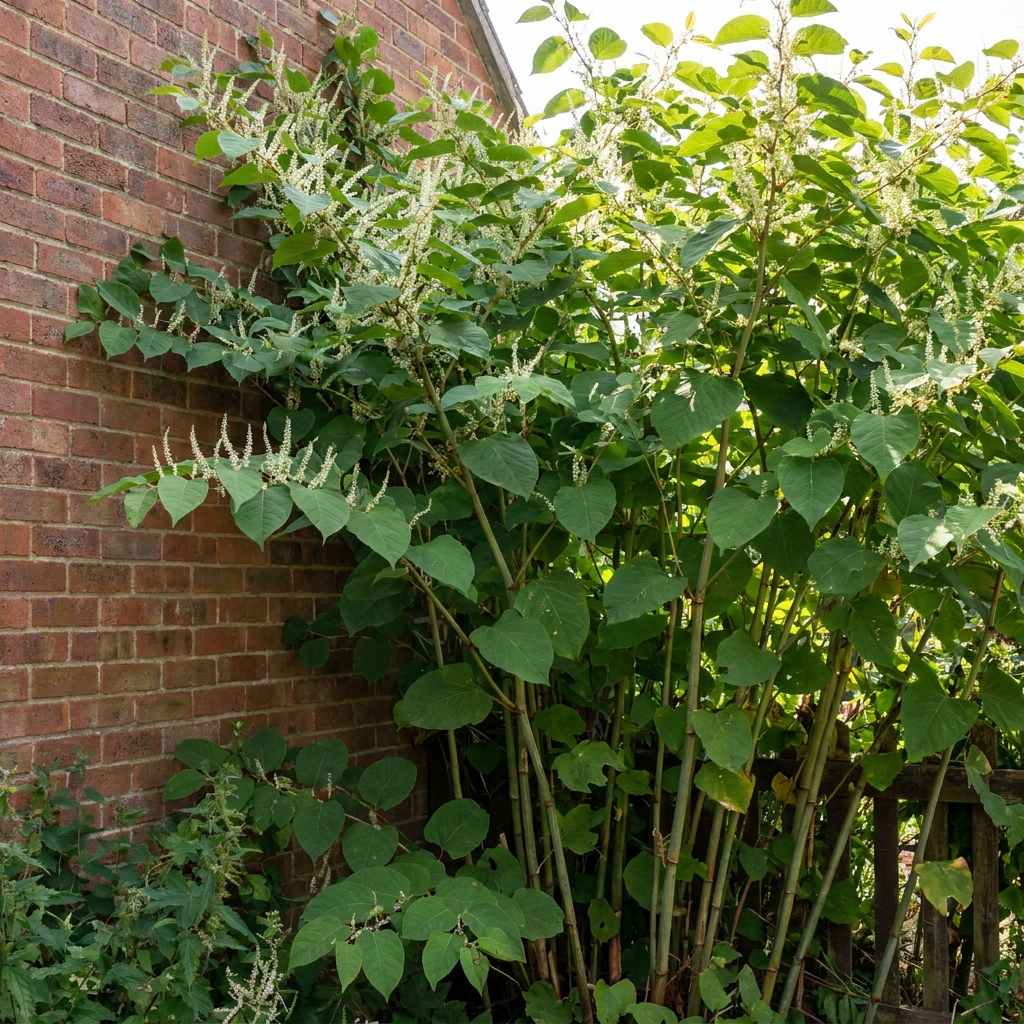
The short answer
Responsibility for knotweed in a rented home usually falls on the landlord, as owner of the land, but the tenancy agreement and conduct matter. The landlord generally bears the cost of professional treatment, since it is a property defect rather than day-to-day garden upkeep. A tenant who cuts or spreads the plant could face liability under the Wildlife & Countryside Act 1981. If knotweed spreads to a neighbour, the landlord can be liable in nuisance under Williams v Network Rail.
Knotweed in a let property raises a simple question with a layered answer: who pays, and who is at fault if it spreads? The starting point is that the landlord owns the land and so usually carries responsibility for a structural-grade problem like knotweed. But the tenancy agreement, the tenant’s own conduct, and the law on spread all feed in. This guide untangles the responsibilities.
Rented property responsibility at a glance
- Owns the land Landlord
- Usually pays for treatment Landlord
- Routine garden upkeep Often the tenant (check the lease)
- Spreading it (cutting/dumping) Tenant risk – W&C Act 1981
- Spread to a neighbour Landlord nuisance risk (Williams)
- Governing document The tenancy agreement
The starting point: the landlord owns the land
Because Japanese knotweed is a defect of the land rather than ordinary garden maintenance, responsibility for dealing with it usually rests with the landlord as owner. A herbicide treatment programme (typically £1,500–£3,000 over about three seasons) is normally a landlord cost, not something a tenant can be expected to fund as part of keeping the garden tidy. The tenancy agreement should be read carefully, but a standard “keep the garden in reasonable order” clause does not transfer a structural knotweed problem to the tenant.
Where the tenant’s conduct bites
A tenant can still create liability. If a tenant strims, flails or cuts the knotweed and dumps the material – in the wild, on a verge or in general waste – that can be an offence under the Wildlife & Countryside Act 1981 and a breach of controlled-waste duties under the Environmental Protection Act 1990. Tenants should report knotweed to the landlord and leave treatment to professionals rather than attempting to clear it.
| Task | Typically responsible |
|---|---|
| Professional treatment programme | Landlord |
| Reporting the knotweed | Tenant (on discovery) |
| Routine mowing / tidy garden upkeep | Tenant (per the lease) |
| Liability for spreading it by cutting/dumping | Whoever did it (often the tenant) |
| Liability for spread to a neighbour | Landlord (nuisance) |
Spread to neighbours: the landlord’s exposure
If knotweed at the let property spreads onto a neighbour’s land, the landlord – as the owner who knew or ought to have known of it – can be liable in private nuisance under Williams v Network Rail. That makes prompt treatment in the landlord’s own interest, not just the tenant’s. The neighbour’s remedies are the same escalation ladder as any boundary dispute.
Practical steps for each side
- Tenants: report knotweed in writing on discovery; never cut or move it; keep a dated record.
- Landlords: commission a PCA-accredited survey and treatment plan; act promptly to avoid neighbour liability.
- Both: check the tenancy agreement for any specific garden or pest clauses.
For how the plant is treated and what programmes cost, see how to kill knotweed and the removal cost guide.
Frequently asked questions
Who is responsible for knotweed in a rented house?
Usually the landlord, as owner of the land. Knotweed is a property defect rather than routine garden upkeep, so a professional treatment programme is normally a landlord cost. The tenancy agreement should still be checked.
Does the tenant have to pay for knotweed treatment?
Generally no. A standard obligation to keep the garden tidy does not transfer a structural knotweed problem to the tenant. Professional treatment is normally the landlord’s responsibility.
Can a tenant be liable for knotweed?
Yes, if they spread it – for example by cutting it and dumping the material, which can be an offence under the Wildlife & Countryside Act 1981 and breach controlled-waste duties. Tenants should report it and leave treatment to professionals.
What if the knotweed spreads to a neighbour?
The landlord, as the owner who knew or ought to have known of it, can be liable to the neighbour in private nuisance under Williams v Network Rail – which is why prompt treatment is in the landlord’s interest.
Sources & further reading
- Williams v Network Rail Infrastructure Ltd [2018] EWCA Civ 1514
- Wildlife & Countryside Act 1981, s.14 and Schedule 9
- Environmental Protection Act 1990 (controlled waste, duty of care)
- gov.uk — Prevent Japanese knotweed from spreading
This guide is general information, not a site-specific survey or legal advice. Japanese knotweed treatment and removal should be assessed by a PCA-accredited specialist before you act.