The short answer
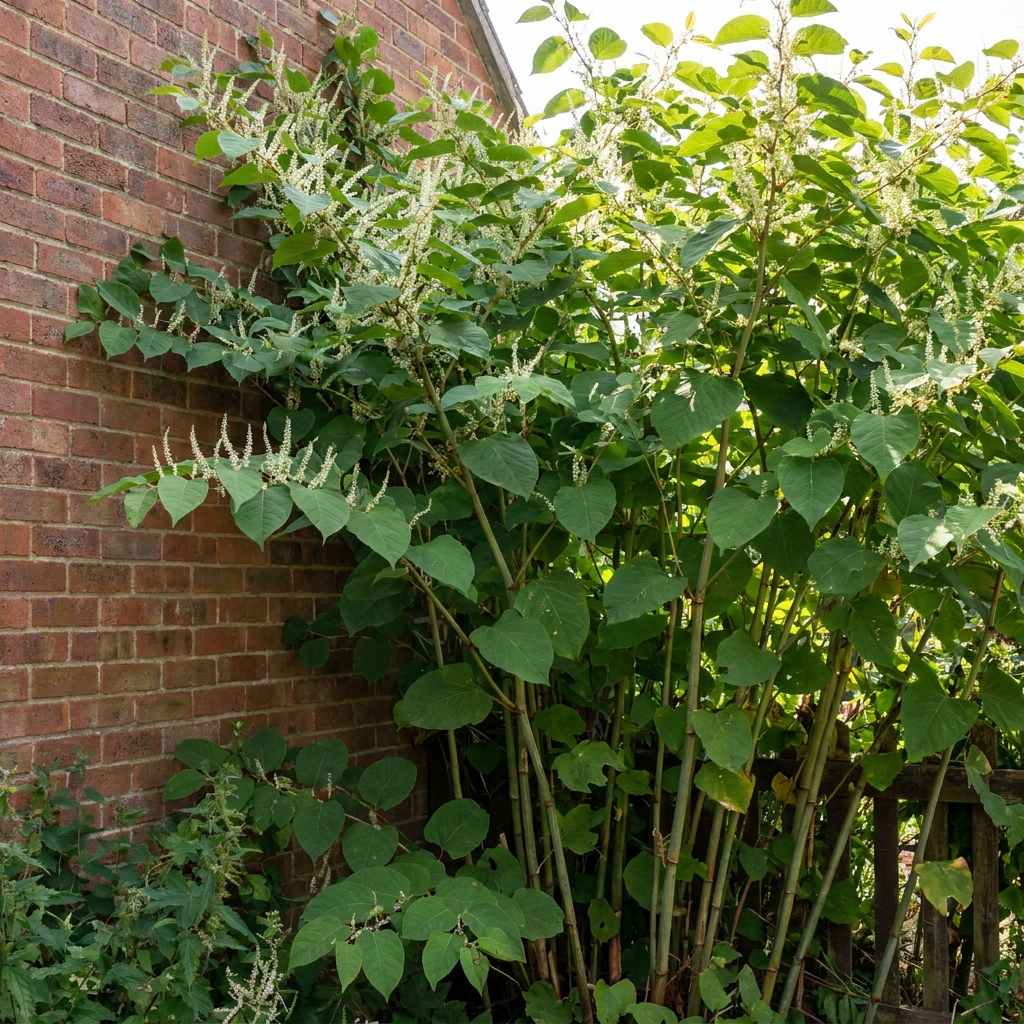
Japanese knotweed is not dangerous to people or pets — it is not poisonous and the young shoots are even edible. The genuine risks are practical, financial and legal: it can exploit weaknesses in hard surfaces and drains, complicate mortgages and house sales, and lead to nuisance claims if it spreads to a neighbour. Reports of it “destroying foundations” are usually overstated; serious structural damage is uncommon, but the property and legal consequences are real.
Headlines about Japanese knotweed can be alarming, with talk of cracked foundations and ruined homes. The reality is more measured. The plant poses no direct danger to health, and outright structural destruction is rare. What it does threaten is the value, saleability and legal status of a property — and that is where the real cost lies. This page separates the genuine risks from the scare stories.
Knotweed risk at a glance
- Toxic to people/pets? No — not poisonous; shoots are edible
- Structural collapse? Uncommon; can exploit existing weaknesses
- Main real risk Property value, sale and mortgage
- Legal risk Nuisance claims; offence to spread in the wild
- Typical survey £150–£350 for a professional report
- Treatment programme £1,500–£3,000 over ~3 seasons (herbicide)
Is it dangerous to health?
No. Japanese knotweed is not poisonous to humans or animals. There is no toxicity risk from touching it, and the young spring shoots are actually edible (though picking from a treated or roadside stand is unwise). It does not cause allergic reactions in the way some plants do. In short, the “danger” is not a health one — which is why this guide focuses on property and legal matters instead.
Can it damage buildings?
This is where the scare stories come in, and where a calm view helps. Knotweed does not have the power to break through sound, undamaged structures. What it can do is exploit existing weaknesses — growing into cracks in tarmac and paving, gaps in old brickwork, drains and cavities — and widen them. Serious structural damage to a house is uncommon. The RICS 2022 guidance reflects this more proportionate, risk-based view, moving away from the older blanket alarm. See the RICS categories.
| Risk type | Reality |
|---|---|
| Health | None — not toxic to people or pets |
| Structural | Uncommon; exploits existing cracks rather than breaking sound structures |
| Hard surfaces & drains | Can grow into and widen existing gaps in tarmac, paving and drains |
| Property value & sale | Real — can affect mortgageability and require a treatment plan |
| Legal | Real — nuisance claims and the offence of spreading in the wild |
The real risk: property, money and the law
The genuine cost of knotweed is rarely bricks and mortar — it is the effect on a property transaction. Many lenders require a professional survey and a treatment plan backed by an insurance-backed guarantee before they will lend, which can delay or complicate a sale or purchase. Sellers must answer honestly about knotweed on the TA6 property form, and getting that wrong can lead to a misrepresentation claim. See knotweed and mortgages and selling a house with knotweed.
There is also a clear legal dimension. Allowing knotweed to encroach onto neighbouring land can give rise to a private nuisance claim — established in Williams v Network Rail (2018) — and it is an offence under the Wildlife & Countryside Act 1981 to cause it to spread in the wild. See knotweed law in the UK.
Putting the cost in perspective
The plant is manageable. A professional survey typically costs in the region of £150–£350, a herbicide treatment programme often runs at around £1,500–£3,000 over about three seasons, and full excavation (“dig and dump”) is more expensive at £5,000–£15,000 or more depending on the site. These are real costs, but they are predictable and they make the problem solvable rather than catastrophic. See removal costs.
Frequently asked questions
Is Japanese knotweed dangerous to humans or pets?
No. It is not poisonous and poses no direct health risk — the young shoots are even edible. Its danger is to property, finances and your legal position, not to health.
Can Japanese knotweed destroy a house’s foundations?
Serious structural damage is uncommon. Knotweed exploits existing weaknesses — cracks in tarmac, drains and old brickwork — rather than breaking through sound, undamaged structures. The RICS 2022 guidance takes this proportionate, risk-based view.
Why is Japanese knotweed considered such a problem then?
Because of its effect on property: it can complicate mortgages and sales, often requires a treatment plan with an insurance-backed guarantee, and can lead to nuisance claims if it spreads to a neighbour. The cost is financial and legal more than structural.
How much does it cost to deal with Japanese knotweed?
A survey is typically around £150–£350, a herbicide programme around £1,500–£3,000 over roughly three seasons, and full excavation £5,000–£15,000 or more depending on the site. Costs are best confirmed by a PCA-accredited specialist.
Sources & further reading
- RICS — Japanese knotweed and residential property guidance note (2022)
- Environment Agency — Treatment and disposal of invasive non-native plants
- Williams v Network Rail Infrastructure Ltd (2018) EWCA Civ 1514
- Wildlife & Countryside Act 1981 — Section 14 and Schedule 9
This guide is general information, not a site-specific survey or legal advice. Japanese knotweed treatment and removal should be assessed by a PCA-accredited specialist before you act.