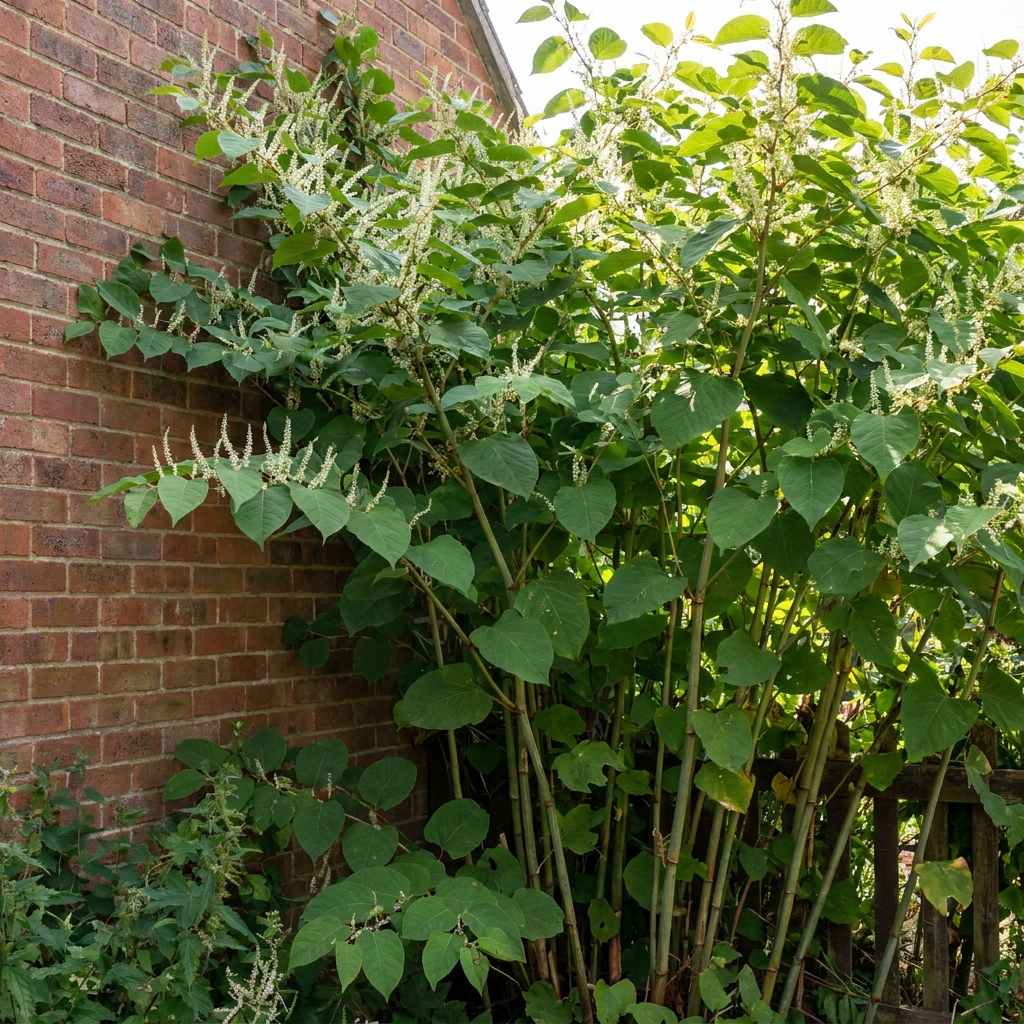
The short answer
Buying a house with Japanese knotweed can be perfectly sound – provided you survey it, understand the RICS category and secure a treatment plan with an insurance-backed guarantee. Commission a PCA-accredited survey, ask the seller for a plan and IBG (or negotiate the price/a retention to fund treatment), and confirm your lender’s position early. Since the 2022 RICS guidance, most affected homes are mortgageable when properly managed.
Finding knotweed on a property you want to buy is not a reason to walk away automatically. It is a reason to do your homework. A well-managed infestation with a plan and guarantee can leave you with a sound, mortgageable home – sometimes at a useful discount. The danger is buying blind. This guide sets out exactly what to check, who to involve and how to protect your money.
Buying with knotweed at a glance
- First step PCA-accredited survey
- Key question Which RICS category?
- Protection Treatment plan + IBG
- Negotiation Price cut or retention
- Lender check Confirm appetite early
- Walk-away trigger No plan available & severe spread
Get a proper survey first
Before you commit, commission a survey from a PCA-accredited specialist – not just a generic homebuyer report. A mortgage valuation may flag the knotweed, but a dedicated knotweed survey identifies the extent of the stand, the likely rhizome spread, the RICS management category and the recommended treatment and cost. That report is your evidence base for everything that follows.
Understand the RICS category
The 2022 RICS guidance assigns a management category (A–D) based on proximity to buildings and impact, replacing the old rigid 7-metre rule. The category tells you how serious the situation is and how lenders are likely to view it.
| Check | Why it matters |
|---|---|
| RICS category (A–D) | Drives lender appetite and price impact |
| Existing treatment plan | Shows the problem is being managed |
| Insurance-backed guarantee | Lender requirement; protects you long-term |
| TA6 disclosure history | Confirms what the seller has declared |
| Encroachment from next door | May raise a neighbour/encroachment issue |
Negotiate and protect your money
Once you know the cost and category, you have options:
- Ask the seller to commission a treatment plan and IBG before completion.
- Negotiate a price reduction to fund the treatment yourself.
- Ask your lender about a retention – part of the advance held back until works begin.
Confirm your own lender’s position early; appetite varies, so a broker who knows current criteria helps – see mortgages and knotweed.
When to walk away
Walking away is justified if the seller refuses to disclose or engage, if no PCA contractor will offer an IBG, or if the stand is severe and the price does not reflect the full cost of dealing with it. Otherwise, a managed infestation at the right price is often a sound buy. This is general information, not legal or valuation advice – have any infestation assessed by a PCA-accredited specialist.
Frequently asked questions
Is it a bad idea to buy a house with Japanese knotweed?
Not necessarily. A managed infestation with a treatment plan and insurance-backed guarantee can be a sound purchase, sometimes at a discount. The key is to survey it, understand the RICS category and price the treatment in before you commit.
Should the seller pay to treat the knotweed?
That is a matter for negotiation. Many buyers ask the seller to commission a plan and IBG, or agree a price reduction to fund treatment themselves. Either way, get the arrangement documented before completion.
Will my mortgage be affected as the buyer?
It can be. Lenders assess the RICS category and usually want a treatment plan and IBG. Most will lend where the infestation is managed, but confirm your lender’s position early, ideally through a broker who knows current criteria.
What is a retention and how does it help?
A retention is where the lender holds back part of the advance until treatment begins. It lets the purchase proceed while ensuring the works are actually carried out, protecting both you and the lender.
Sources & further reading
- RICS — Japanese knotweed and residential property, guidance note (2022)
- Property Care Association (PCA) — Invasive Weed Control Group, surveys & guarantees
- UK Finance — Mortgage Lenders’ Handbook
- The Law Society — TA6 Property Information Form
This guide is general information, not a site-specific survey or legal advice. Japanese knotweed treatment and removal should be assessed by a PCA-accredited specialist before you act.